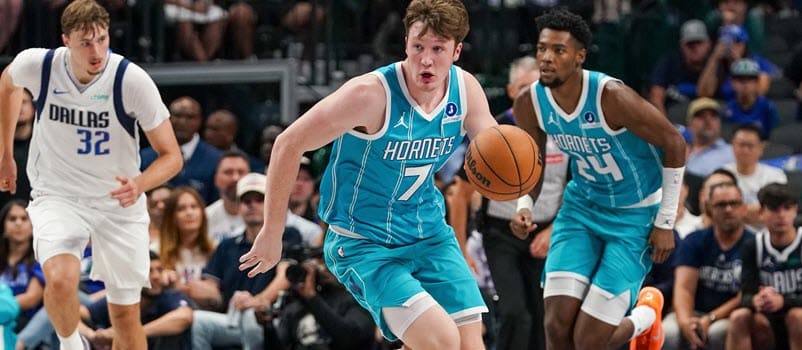


The Brooklyn Nets enter the 2026-27 NBA season as the league's youngest team, while the Golden State Warriors once again field the oldest roster in basketball.
Using official rosters and birthdate data, we calculated the exact average age of every NBA team heading into the 2026-27 season to see which franchises are building for the future and which are still leaning on veteran experience.
Below is the full breakdown of NBA team ages for 2026-27, ranked from youngest to oldest, along with the storylines behind the numbers.

How We Ranked NBA Team Ages for 2026-27
Standard and two-way rosters were pulled from NBA.com and Basketball-Reference, with each player's exact age calculated as of October 20, 2026 -- the start of the 2026-27 regular season. Individual ages were then averaged across each team's roster to produce the rankings below.
Also: See the average age of all 32 NHL clubs.
The Youngest NBA Teams for 2026-27
The Brooklyn Nets (24.31 average age) top the list of youngest NBA teams for 2026-27, powered by a young core that includes Nolan Traoré, Egor Demin, Ben Saraf, and Danny Wolf. The Chicago Bulls (24.52) and Oklahoma City Thunder (24.84) round out the top three, with the defending-contender Thunder blending a young supporting cast around their veteran core. The Memphis Grizzlies (25.00) and Dallas Mavericks (25.10) complete the top five, with Dallas leaning heavily on 2025 No. 1 pick Cooper Flagg to anchor a roster built for the long term.
The Oldest NBA Teams for 2026-27
On the other end of the spectrum, the Golden State Warriors (29.39 average age) are the oldest NBA team heading into 2026-27, still built around Stephen Curry, Draymond Green, Jimmy Butler, and Al Horford. The Miami Heat (29.01) rank second-oldest after adding Giannis Antetokounmpo to a roster still featuring Klay Thompson and Andrew Wiggins, followed by the New York Knicks (28.23), Boston Celtics (27.57), and Indiana Pacers (27.49).
Full NBA Team Age Rankings for 2026-27 (Youngest to Oldest)
Rank | Team | Average Age |
|---|---|---|
1 | Brooklyn Nets | 24.31 |
2 | Chicago Bulls | 24.52 |
3 | Oklahoma City Thunder | 24.84 |
4 | Memphis Grizzlies | 25.00 |
5 | Dallas Mavericks | 25.10 |
6 | Washington Wizards | 25.32 |
7 | Toronto Raptors | 25.44 |
8 | Los Angeles Lakers | 25.46 |
9 | New Orleans Pelicans | 25.56 |
10 | Milwaukee Bucks | 25.67 |
11 | Utah Jazz | 25.78 |
12 | Minnesota Timberwolves | 25.84 |
13 | San Antonio Spurs | 25.90 |
14 | Phoenix Suns | 26.04 |
15 | Atlanta Hawks | 26.10 |
16 | Orlando Magic | 26.22 |
17 | Portland Trail Blazers | 26.35 |
18 | Sacramento Kings | 26.39 |
19 | Charlotte Hornets | 26.45 |
20 | Philadelphia 76ers | 26.73 |
21 | Cleveland Cavaliers | 26.74 |
22 | Detroit Pistons | 27.09 |
23 | LA Clippers | 27.27 |
24 | Denver Nuggets | 27.38 |
25 | Houston Rockets | 27.47 |
26 | Indiana Pacers | 27.49 |
27 | Boston Celtics | 27.57 |
28 | New York Knicks | 28.23 |
29 | Miami Heat | 29.01 |
30 | Golden State Warriors | 29.39 |
Why NBA Roster Age Matters for Fantasy and Betting
Roster age is more than a fun stat -- it's a real signal for fantasy managers and bettors alike. Younger rosters tend to carry more injury-recovery upside and breakout-candidate depth, but also more inconsistency night to night. Older rosters often bring proven track records and better health/rest management, but come with more late-season wear and tear. As the 2026-27 season unfolds, keep an eye on how these age curves translate into on-court performance, particularly for the youngest teams looking to accelerate their timelines and the oldest teams trying to make one more push.


