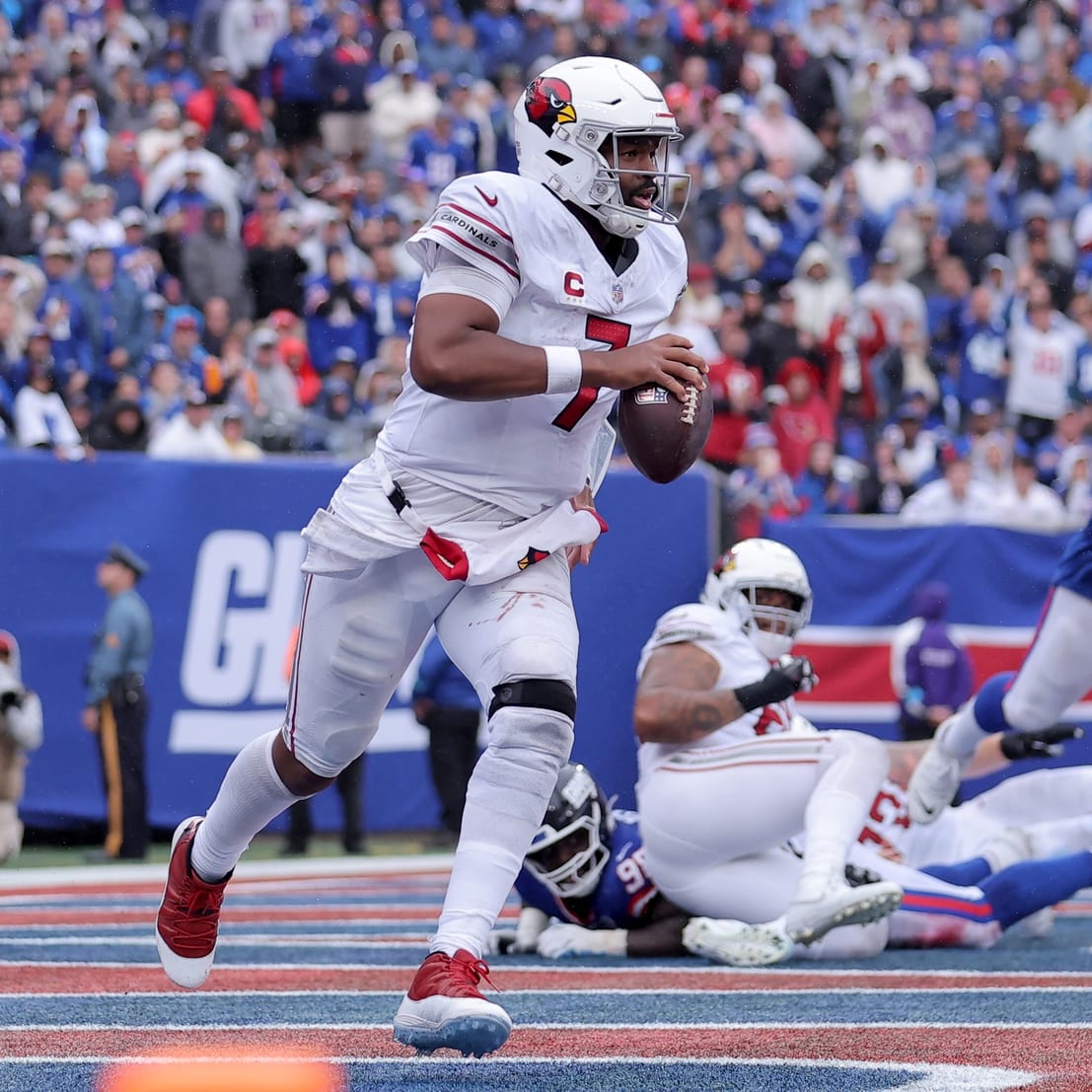
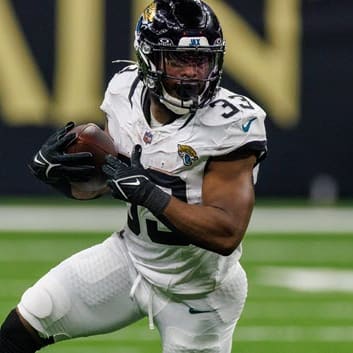
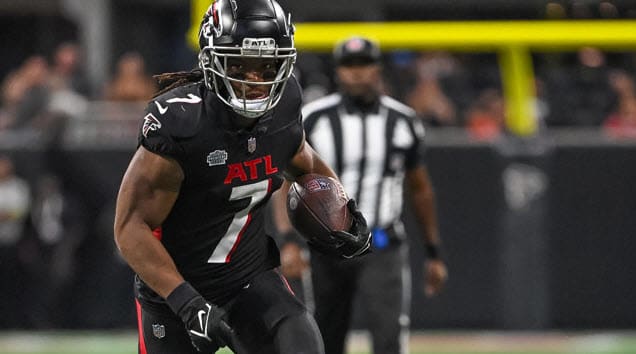
Real football means real injuries. With training camp complete and the preseason underway, let's look at the numerous injuries already influencing draft day decisions.
The Anterior Cruciate Ligament (ACL)
It might seem odd for my first feature of the season's NFL injury report to be about a specific injury and not a player, but the dreaded ACL tear is one of the biggest injuries in professional football, and multiple marquee players are looking to rebound from the ailment.
The ACL is one of four primary stabilizing ligaments of the knee. Located within the knee, the ACL connects to the tibia (shinbone) and the femur forming an X-pattern with the posterior cruciate ligament (PCL). Together the two ligaments limit excessive forward and backward motion of the shinbone on the femur during knee motion. Unfortunately, the ACL is the most frequently injured ligament in the knee and needs to be repaired surgically following failure. In an ACL reconstruction, a graft is utilized to "recreate" the ACL. The graft can be harvested from an assortment of places including the patellar tendon, the hamstring, or even a donor graft. ACL surgery is followed by an extensive rehab process to help the injured athlete return to play (RTP).
Fortunately, the RTP rate following ACL surgery is relatively high, with multiple studies showing a range from 63 to 92 percent. RTP rates and length of time lost can vary based on the timing of the injury and the position the affected player plays. For example, a
Real football means real injuries. With training camp complete and the preseason underway, let's look at the numerous injuries already influencing draft day decisions.
The Anterior Cruciate Ligament (ACL)
It might seem odd for my first feature of the season's NFL injury report to be about a specific injury and not a player, but the dreaded ACL tear is one of the biggest injuries in professional football, and multiple marquee players are looking to rebound from the ailment.
The ACL is one of four primary stabilizing ligaments of the knee. Located within the knee, the ACL connects to the tibia (shinbone) and the femur forming an X-pattern with the posterior cruciate ligament (PCL). Together the two ligaments limit excessive forward and backward motion of the shinbone on the femur during knee motion. Unfortunately, the ACL is the most frequently injured ligament in the knee and needs to be repaired surgically following failure. In an ACL reconstruction, a graft is utilized to "recreate" the ACL. The graft can be harvested from an assortment of places including the patellar tendon, the hamstring, or even a donor graft. ACL surgery is followed by an extensive rehab process to help the injured athlete return to play (RTP).
Fortunately, the RTP rate following ACL surgery is relatively high, with multiple studies showing a range from 63 to 92 percent. RTP rates and length of time lost can vary based on the timing of the injury and the position the affected player plays. For example, a running back like Zach Charbonnet, who suffered his ACL tear in the Divisional Round of the postseason, is more likely to miss more time this year than Tucker Kraft who sustained his ACL injury in Week 9. This is already proving true, as Kraft is expected to play in Week 1 while Charbonnet is likely to start the year on the PUP.
Furthermore, ACL injuries often occur in conjunction with other structures including the PCL, the collateral ligaments and menisci of the knee. In these multi-structure injuries, the RTP rate is lower and can carry even longer rehab windows. Patrick Mahomes and Malik Nabers are two prime examples of players trying to overcome these types of injuries.
Mahomes tore his ACL and lateral collateral ligament (LCL) in Week 15 of the 2025 season and ultimately needed surgery to repair both structures. Nabers tore his ACL and lateral meniscus when he hit the turf in Week 4. The Giants receiver has since undergone multiple surgeries to fix the damage and address additional scar tissue.
Despite the complexity of their injuries both Mahomes and Nabers are trending toward being available when the regular season starts. However, RTP does not equal a return to performance. Studies have shown wide receivers are less likely to return to their previous performance level, while quarterbacks do appear to have a better chance at repeating their past success. As a result, those willing to invest in Nabers should anticipate some early season struggles. Mahomes is more likely to return to form, but I wouldn't reach beyond his current ADP at the moment. It wouldn't be surprising to see him limited out of the pocket as he becomes comfortable moving and throwing at top speed again.
Michael Penix's situation is even more unique, as he is looking to return from the third ACL tear of his career. Penix tore his right ACL twice while in college and tore the opposite ACL last season. Penix returned to practice Monday, splitting reps with Tua Tagovailoa. Penix's laundry list of injuries includes the knee issues and major shoulder injuries, increasing his overall injury risk profile.
The rookie running back has already emerged as an intriguing running back option in both yearly and keeper formats. The No. 3 overall pick looked explosive in his preseason debut, converting 11 carries into 58 yards to go with three receptions for 14 yards. Unfortunately, he suffered an ankle sprain in the same game and may not see much more action until Week 1.
Love's sprain is a high ankle sprain, an injury more significant than the more common lateral ankle sprain. The ankle is a complex articulation made up of multiple joints. The term high ankle sprain is applied when the ligaments supporting the distal tibiofibular (tibfib) joint are sprained.
The distal tibfib is formed where the distal ends of the tibia and the fibula create a "roof" over the talus of the foot. The area is fortified by multiple ligaments that can be sprained, most commonly after the athlete plants his foot into the turf and the leg is forced outward in a direction known as external rotation. The motion can disrupt the connective tissue of the distal tibfib and create separation between the two lower leg bones. As a result, high ankle sprains usually carry a more extensive recovery process, resulting in more time lost. In some cases, surgery is necessary to stabilize the area.
The Cardinals have confirmed Love does not need surgery, but the team is handling its prized rookie conservatively. He has already been ruled out of practice for the week ahead, as it appears the team will focus on getting Love ready for Week 1. High ankle sprains can be difficult to navigate in-season, but Love should have ample time to completely recover by the start of the season. Don't downgrade him too much just yet.
The Carolina running back has not participated in practice since straining his hamstring on August 15. The team quickly ruled his status "week-to-week" suggesting a more moderate strain. Hamstring strains are notoriously difficult injuries to manage and are easily aggravated upon return. Prior injury is one of the most notable red flags for future injuries. Hubbard does have a history of lower extremities strains, having missed two games last season with a calf strain. With Jonathon Brooks looking to bounce back after two tears of his right ACL, it's hard to put much stock in the Panthers backfield. Coach Dave Canales appears to understand the situation, admitting the team will likely use a running back by committee approach to start the season. I'm letting someone else roll the dice on these two.
Turf Burns
Ashton Jeanty: Jeanty is also dealing with an ankle sprain, though it remains unclear what type of sprain he suffered. He does have a history of ankle issues, having sprained his ankle in Week 12 of last season. Jeanty did not miss anytime then and appears to have avoided any serious injury that could jeopardize his Week 1 availability. Keep an eye out for a more concrete update from Las Vegas, but for now continue to draft Jeanty as you normally would.
Alvin Kamara: Kamara is currently sidelined with a medial collateral ligament (MCL) sprain suffered in a joint practice. The MCL can heal without surgical intervention, especially if the sprain is mild and does not involve the medial meniscus. Still, New Orleans expects him to miss at least a month, paving the way for Travis Etienne to see a larger workload.
George Kittle: The 49ers tight end is defying logic in his return from an Achilles tear. Kittle was activated from the PUP list over the weekend, just a little more than seven months after the injury occurred. While tight ends have the highest RTP following an Achilles tear, studies have also shown that most players fail to return to their prior levels of performance after the injury. Although Kittle's return to the lineup is inspiring, it's hard to bank on him automatically becoming a top tier fantasy option. I'll roll the dice if he slips too far on draft day, but I would follow up that decision with a reliable backup option.
Christian McCaffrey: General "tightness" resulted in McCaffrey taking some additional time off, but the 49ers running back returned to practice over the weekend. It sounds like the extended break was by design and he should be ready to go by Week 1. McCaffrey's injury history is lengthy, but the upside often outweighs the risk. His current ADP of 5.66 seems fair.
Kyle Monangai: The Bears running back is "week-to-week" with a hyperextended knee. Unfortunately, this designation only informs us how the injury occurred and not what structures were involved. Given this ambiguity, I'm moving him down my draft board.