Jerry Donabedian provides advanced stats and insights for every Week 1 contest, including a surprise shootout in Houston where Dalton Kincaid and DJ Moore both reached 100 yards.
Week 1 is always the most challenging of the year for this type of recap work, and it's also the most interesting/important week from a fantasy standpoint. As such, I don't want to rush through things and risk reaching conclusions that would then be contradicted by a deeper dive.
The solution? I'm posting all of the statistics, injuries and stock reports below, with my observations and thoughts coming later once I've finished all my viewing and research. The full article should be done around the time MNF kicks off, and it'll then be updated Tuesday morning to include the MNF games and anything else I have to add.
Stats come from NFL Next Gen unless otherwise specified. Bold and blue lettering denote strong/high numbers relative to the player's pre-2026 baseline. Italics and red lettering denote poor/low numbers relative to the player's pre-2026 baseline. Keep in mind that it's a one-game sample, so there's not necessarily a reaction or conclusion for each high/low number. In many cases it's just something to keep track of over the next few weeks, not anything that needs to be acted on immediately.
Through their first three drives, the Pats used 11 personnel on just four of 18 snaps on first/second down. They clearly wanted to attack Seattle from heavy looks out of the gate.
ICYMI, Drake Maye tossed a trio of fourth-quarter interceptions. All were ugly, and all appeared to be his fault. The second one was semi-justifiable in the name of taking a shot on 3rd-and-long, but the first and third picks were just the stupid versions of risk-taking in situations where an incompletion would've been OK.
Backfield
RB Rhamondre Stevenson played 85% of snaps and got 24 of 32 RB opportunities (75%), working hard for his 95 yards on a night where the blocking was rough and he looked a half step slow out of the blocks.
Stevenson played 72% of snaps on first down, 87% on second down and 100% on third down. The Patriots subbed in Corey Kiner for some carries and Lan Larison for a couple of targets on early downs, but Stevenson was entrusted with everything from pass-blocking to short-yardage carries.
Kiner and Larison combined for just 20 yards on their eight touches, so we should see another heavy dose of Stevenson if TreVeyon Henderson isn't back for Week 2. Given Wednesday's workload, Stevenson will be a must-start if Henderson is out again for the home game against Pittsburgh.
Henderson returned to practice Monday:
RB TreVeyon Henderson (ankle) and C/G Ben Brown (knee) will return to practice today, per Mike Vrabel.
WR A.J. Brown suffered a high-ankle sprain on the opening drive of the third quarter. He missed the rest of the game and has since been placed on IR, ruling him out through Week 6.
The Patriots play a Thursday game in Week 8. It sounds like Brown is in danger of missing time beyond the four-game minimum, so Week 9 is my best guess right now for a return.
It was a brutal night for Doubs, who played just 42% of snaps before Brown's injury and dropped two of his three targets. One of the drops came late in the game when he was wide open for a gain of 20+; Drake Maye then threw an ugly pick on 3rd-and-long the very next play.
Prior to Brown's injury, Doubs got 63% of snaps in 11 personnel and 38% in 12 personnel. After the injury, Doubs took 88% of snaps in 11, but still only 42% in 12 personnel, sharing those snaps with Kyle Williams.
Doubs, Hollins and Douglas all topped 80% snap share in 11 personnel after Brown's departure. Douglas was at 100%, but he took just one of the seven snaps in 12 personnel.
TE Hunter Henry went to the medical tent after a big hit early in the third quarter. He missed some snaps but returned before the end of the quarter.
If we look at only Q1, Q2 and Q4, then Henry had an 82% snap share and was on the field for 25 of New England's 28 pass plays. He did block on some of those, but there were only three occasions when he came off the field in favor of Eli Raridon for a pass play in 11 personnel. That's similar to how the Pats deployed Henry last year.
Henry finished with a 78% snap share and 58% route share. Assuming he's healthy, I'd expect closer to 80-85% and 70-75%, respectively, in the next game.
Rookie TE Eli Raridon was schemed wide open for a goal-line TD, but it was his only target and he finished with a route share of just 19%.
Raridon did play a good bit, with a 46% snap share even if we don't include the third quarter. He was on the field for every play with multiple TEs throughout the game, and stole a few snaps from Henry in 11 personnel.
QB Sam Darnold injured his hip in the first quarter and missed the rest of the game, turning things over to Drew Lock, who sent 10 of the 22 targets to JSN.
Lock's numbers look OK (16-of-27 for 182 yards and a TD), but that's mostly because JSN took a short pass for a long TD on a 4th-and-1.
Darnold is expected to miss at least one game, but he seemingly avoided the early concerns about a hip fracture. Whatever you think of Darnold, there's no doubt Lock is a major downgrade.
The Seahawks ran just 48 plays, which helps explain the lack of volume for everyone not named JSN.
For a point of reference, Seattle averaged 59.7 plays per game (21st). League average was 61.3 per game.
RB Jadarian Price started and ran for 13 yards on the first snap of the season, but George Holani entered two plays later and rotated fairly evenly with Price throughout the game.
Price finished with a 50% snap share and 12 of 23 RB opportunities (52%), getting 10 of the 20 carries (8 for Holani, 2 for Wilson) and two of the three targets (1 for Holani).
Price took six carries for 42 yards over the first 23 minutes of game time, but he didn't get another carry before halftime and then had just four carries for 10 yards in the second half (negative game script didn't help).
Price took 67% of snaps on first/second down but didn't play a single snap on third down.
Wilson played just three snaps, but two of those came on 3rd-and-short & 4th-and-short, plus he had a 2nd-and-short snap wiped out by a penalty.
Wilson's only other snap was a random carry on second down. His box score doesn't look problematic for Price, but that might not have been the case if Seattle had visited the goal line.
With Holani dominating passing downs and Wilson a threat for goal-line work, Price's initial role feels very similar to that of 2025 Kenneth Walker. That's probably a good thing if you view him as a rookie who didn't get much playing time in college. It's less encouraging if you were counting on Price to be an early fantasy starter.
The good news? A Week 2 matchup with Arizona is the type of game where the "Walker role" might play. The Cardinals will be able to focus on stopping the run more if Sam Darnold is indeed absent, but that may also mean Price is a larger part of the early gameplan for Seattle.
Watching Pats-Seahawks again, I'm
A) More impressed with Jadarian Price
B) Think his role will soon (next week?) be larger than Kenneth Walker's 2026 role.
Jaxon Smith-Njigba handled a 92% snap share and 96% route share, rarely leaving the field despite seeing a target on 42.3% of his routes.
Last year, JSN's snap/route shares were typically in the 80s. A rise to the 90s might also mean a slight dip in per-route production, but there was no sign of that Wednesday night. Also, it's possible his snap and route shares will dip a little in games with more overall volume. Fatigue wasn't much of an issue with the Seahawks failing to sustain drives.
In heavier packages (12/21/22), JSN took 83% of snaps, with Kupp at 62% and Shaheed at 44%.
There wasn't ultimately a huge difference in the snap/route shares for Kupp and Shaheed, but this does point slightly in Kupp's favor.
Kupp made a brilliant one-handed catch and then had a TD wiped out by a penalty shortly thereafter. He could be a decent deep-league play once Darnold is back.
TE AJ Barner handled an 88% snap share and 70% route share. He got 81% of snaps in 11 personnel, but three of the four plays he missed were passes (with Elijah Arroyo replacing him as the tight end).
No need to adjust expectations for Barner based on this one game. He only left the field a few times, and he even got a QB sneak on a 4th-and-1 play, only to have it erased by an offensive penalty.
The 49ers opened pass-heavy with Brock Purdy dropping back on 18 of 23 plays (78%) over the first three drives and producing a FG, an INT and a punt. The 49ers then called run plays on at least 40% of snaps every subsequent drive, shifting to a balanced approach before running out the clock at the very end.
San Francisco's PROE was +15.1% over the first three drives and -2.9% for the rest of the game.
The 49ers were mostly throwing from two-WR formations, using 11 personnel on 35% of snaps over the first three drives and 24% of snaps the rest of the game.
Purdy threw a bad pick on the third drive, trying to force the ball to Kittle on a 1st-and-10. Besides that, Purdy was excellent, avoiding negative plays and completing short passes (4.6 aDOT), with one deep TD to Demarcus Robinson.
Purdy threw 38.2% of his passes at/behind the LOS, while only 17.7% travelled 10+ yards downfield. The TD to Robinson was one of just two deep targets.
Backfield
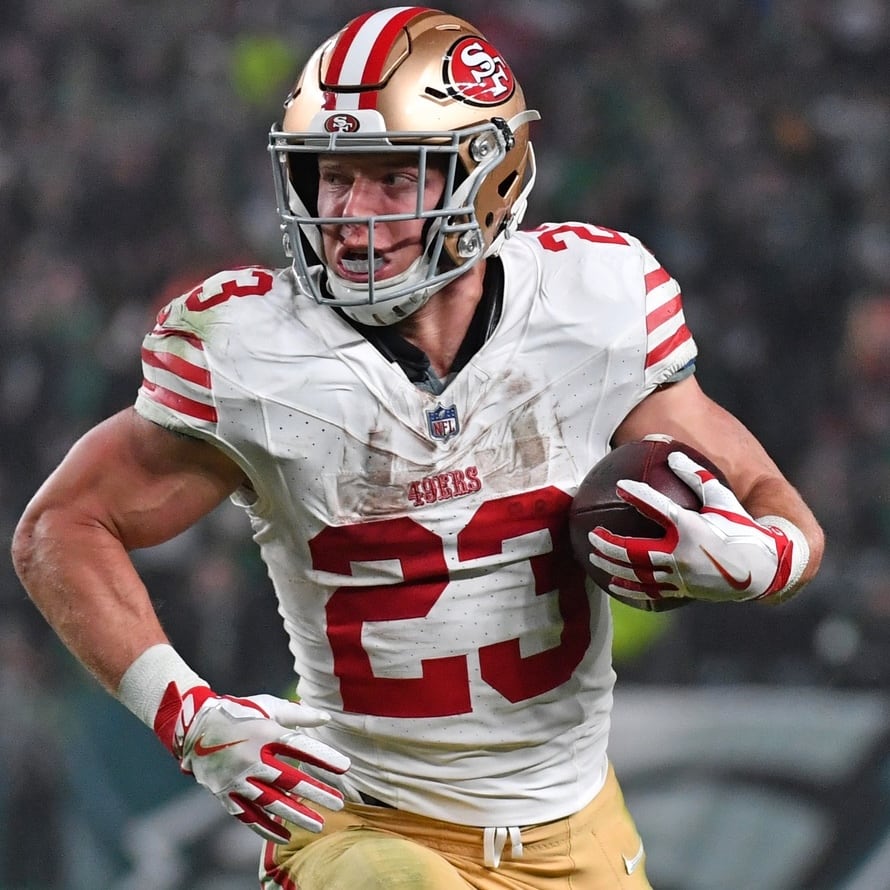
RB Kaelon Black took 44% of snaps and 45% of RB opportunities, finishing with 16 carries for 68 yards (and one catch for five yards) even though Christian McCaffrey played deep into the fourth quarter (CMC was actually on the field for what ended up being San Francisco's final offensive snap).
Black was heavily involved from the jump, taking two carries on the opening drive and playing 41% of snaps in the first quarter. He ultimately played at least 36% of snaps in every quarter.
Black took 48% of snaps on 1st downs, 52% on 2nd downs, 17% on 3rd downs.
While still unlikely to have standalone value in mainstream fantasy leagues, Black's strong role in Week 1 suggests he could see massive usage in the event of a CMC absence down the road. Of course, the odds of said absence actually happening are lower when McCaffrey is playing less. Fewer snaps/hits = lower injury risk, regardless of the player, situation, etc. It may seem weird to think of it like this, but CMC's injury rate on a per-touch or per-tackle basis is actually among the best of any modern RB. Anyway...
RB Christian McCaffrey led the team with eight targets, but even his 50% route share (19 routes) represents a considerable drop compared to last year when he led all RBs with 31 routes per game.
I doubt McCaffrey actually gets stuck in a 50/50 split with Black all season, but we can't entirely write this off just because it was Week 1, or because the game was in Australia, or because McCaffrey missed some practice time this summer. All of those things merit consideration, but we also saw Kyle Shanahan still using CMC in garbage time, which would be odd if the team were overly concerned about any of the aforementioned factors. Projecting the workload split for Week 2 involves a lot of guesswork, but it's fair to say that CMC belongs south of his accustomed usage shares and north of what we saw in Week 1. That's a wide gap to bridge, and arguably the difference between being a low-end RB1 or a still-elite RB1. He certainly doesn't look washed up, so some of this may depend on Black's performance, not just CMC's durability/maintenance concerns.
Upcoming home games against Miami and Arizona could allow McCaffrey and Black to both get double-digit carries, but that won't be the case all year, including in October when the 49ers run into the Broncos (Week 4) and Seahawks (Week 5).
McCaffrey struggled to get going early, but he broke a couple of nice runs in the third quarter and looked like his usual self on the few occasions when he had some grass in front of him.
I have CMC ranked as a 1-2 turn pick ROS, pending results of all the other games.
Pass Catchers
WR De'Zhaun Stribling not only got the start over Deebo Samuel (in 21 personnel) but actually led the 49ers in snaps and routes before exiting with an ankle injury midway through the second quarter.
Stribling finished without a target on 13 routes while taking 81% of his snaps out wide.
The early playing time was a good sign, but it sounds like the hype train's dwell time may be 1-2 months.
Re: De'Zhaun Stribling for #49ers fans. Isolated deltoid ligament injuries are quite rare. Most injuries occur when there is an ankle fracture. Many of these injuries can respond to rehab (even grade 3 injuries). As pain and swelling go down, the ankle can be introduced to…
WR Mike Evans was fantastic, making three third-down grabs on the opening drive and later adding a TD. The yardage may not look impressive, but all six of Evans' catches went for a first down or a touchdown. The 49ers repeatedly relied on his size and strength to complete short/intermediate passes in big spots (it helps when your reputation as a deep threat forces defenders to respect that).
Evans made a couple of nice grabs from the slot, but he took 83% of his snaps on the perimeter, as expected.
WR Deebo Samuel saw two targets on the first drive and finished with 18 PPR points on seven touches, but his playing time was far less encouraging, even after Stribling's early exit.
From San Francisco's fifth drive through the end of the game, Samuel played nine of nine snaps in 11 personnel (100%) but just three of 23 snaps (13%) otherwise.
The good news? Samuel drew targets on 38% of routes. That was a common theme, with he, Kittle and McCaffrey all topping 35% TPRR while playing fewer snaps than they're used to. We'll see how that evolves throughout the season in each case.
WR Demarcus Robinson played 91% of snaps from the fifth drive (post-Stribling) through the end of the game.
Evans wasn't far behind at 88%. He took only 63% of snaps over the first four drives, but that was partially due to strong per-snap usage.
Robinson also had a role before Stribling's exit, playing 34% of snaps on the first four drives.
TE George Kittle drew four targets on the opening drive, with at least two being schemed looks, but his role faded throughout the night and he didn't see any more targets after Purdy tried to force him the ball on an INT that ended the third drive.
Kittle played 64% of snaps on the first drive, but his snap share was 50% or lower on each of the next five series. Kittle played just 42% of snaps after the opening drive.
Luke Farrell ended up with the most TE snaps, because....
TE Jake Tonges limped off with a knee injury during the second quarter. He didn't return, and Kyle Shanahan said afterward it doesn't look good.
There was no designated slot man in 11 personnel. Six players took between 2-5 slot snaps in 11p, including TE George Kittle and RB Christian McCaffrey.
Deebo Samuel got a team-high five slot snaps in 11p, but he also had eight perimeter snaps and two in the backfield from the grouping.
Over the first four drives, each of Evans/Stribling/Samuel/Robinson landed between 37% and 63% snap share in two-wide sets.
In three-wide sets, each was between 67% and 78%. In other words, it was a true four-man rotation, albeit with Evans and Stribling clearly ahead of Samuel and Robinson for early snaps. Samuel, of course, was much more involved than Stribling from a touch/target perspective, even early on. There was a lot to digest even before Stribling's injury impacted things.
The Rams used 13 personnel on 40% of plays in the first half, including 6 of 11 first-down snaps (3 in 12 personnel, just 1 in 11 personnel). They then used 13 personnel on 11 of 12 plays on their lone third-quarter drive, before shifting to exclusively 11 personnel in the fourth quarter in comeback move.
Prior to the fourth quarter, the Rams used 13 personnel on 57% of snaps, though 11 of the 21 plays in 13p came on that lengthy third-quarter drive (which ended on an unsuccessful Stafford sneak attempt at the goal line).
Snap/route shares were impacted by the blowout. Sean McVay pulled most of his starters before a final drive that spanned 10 plays.
DE Myles Garrett was placed on injured reserve and scheduled for a knee scope after his underwhelming Rams debut.
DT Aaron Donald is uncertain for Week 2. He didn't play in the opener.
Backfield
RB Blake Corum played just 28% of snaps in the first half and 19% after halftime, but he did get 10 carries on his 13 snaps and gained 54 yards in the process.
RB Kyren Williams played 77% of snaps and took 14 of 24 RB opportunities (58%) before the final drive. The snap/route shares look good, but the split of carries was similar to what we saw late last season — not too far from 50/50. Williams is still dominating snaps in clear passing situations, but Corum is arguably a better pure runner and figures to continue getting a bunch of carries.
Not counting the last drive when Ronnie Rivers took over, Williams played 70% of snaps on 1D, 75% on 2D, 88% on 3D. That's essentially best-case scenario in terms of playing time, except with a tiny per-snap touch rate (especially compared to Corum). Overall, this can basically just be treated as a continuation of last December/January.
Williams was on the field for all six of LA's snaps inside the 10-yard line and took carries on three of those plays, including a five-yard TD. The combo of goal-line work and pass-down work may allow him to get by as a strong RB2 or bottom-end RB1 even with Corum poaching a lot of carries.
Rivers got no playing time before garbage time.
Pass Catchers
WR Puka Nacua played 83% of snaps before the final drive and drew targets on nine of 20 routes. He also drew a holding penalty that should've been a long DPI instead.
Nacua played 86% of snaps in 11 personnel and 81% of snaps in 13 personnel.
WR Davante Adams played 64% of snaps before the final drive, with a 100% snap share in 11 personnel and a 19% share in 13 personnel.
Adams was also on the field for all three snaps in 12 personnel. Overall, I'd say the playing-time signs were positive. The question marks pertain to age (both his and Matthew Stafford's) but I'm not ready for any conclusions there after a Week 1 game played in the wrong hemisphere.
WR Jordan Whittington took 59% of snaps in 11 personnel before the final drive, with Konata Mumpfield getting 32% and Xavier Smith taking 23%. It again looks like we won't get even deep-league relevance from the WR3 role.
TE Terrance Ferguson played 76% of snaps on the Rams' first three drives but just 50% on the next three drives. He finished with just one incomplete target and ran five fewer routes than Colby Parkinson, killing some of the early optimism based on playing time.
Ferguson ultimately played 92% of snaps in multi-TE formations before the garbage-time drive, but he got just 27% of the snaps in 11 personnel. That won't cut it in terms of mainstream fantasy value; it might not even be enough for deep-league value.
Parkinson and Davis Allen split the garbage-time snaps, with Allen getting banged up in the process. Tyler Higbee played nine snaps in 13 personnel and just two snaps otherwise.
Overall verdict: Not much cause for fantasy optimism from this TE room. Parkinson is the one you'd start Week 2 in a desperate spot, but Ferguson makes more sense as a bench stash still.
Stock ⬆️: Rams haters + people with strong jet-lag opinions
The Jets had Week 1's second-lowest PROE pre-halftime (-14.1%) and finished with the fourth-lowest mark. They clearly wanted to run on the Titans and mostly were able to do so, rushing for 152 yards and two TDs.
I wouldn't assume the Jets are a run-heavy team in general, but it's something to watch over the next few weeks after they called passes on just 37.5% of snaps over their first four drives in Week 1.
Backfield
RB Breece Hall played 59% of snaps and handled 24 of 35 RB opportunities (69%), but his workload shares were a bit stronger before Braelon Allen took four of the final eight carries. Before that stretch, Hall had taken 20 of 27 RB opportunities (74%). And he played 62% of snaps before the fourth quarter.
Snap share by down: 1D: 67%, 2D: 65%, 3D: 25%.
Hall played just one of nine snaps in 3rd-and-medium/long. That may sound curious given that he's a much better pass catcher than Braelon Allen, but it's not a bad thing for fantasy -- those are the least valuable snaps for a RB. Allen taking those snaps is probably just a way to avoid overworking Hall from a playing time standpoint.
FWIW... Hall and Allen each played three snaps during the two-minute drill before halftime. If/when the Jets end up in a comeback situation, I'd expect Hall to get most of those passing snaps, unless it gets to the point where they're definitely going to lose.
RB Isaiah Davis was active but only played special teams. Braelon Allen, meanwhile, took 10 carries for 40 yards and had a 23-yard TD run nullified by a holding penalty.
Jets short-yardage watch:
Three snaps inside the 5-yard line yesterday. Breece Hall played all three. NYJ had zero snaps from closer than the 3-yard line.
Six snaps on 3rd or 4th down with 1-2 yards to go. Braelon Allen played 4/6 snaps.
WR Garrett Wilson handled an 81% route share and 30.4% target share, catching six of seven targets for 79 yards. The only disappointment was a lack of team pass volume.
Wilson took 97% of snaps in 11 personnel and 94% in 12 personnel -- the Jets' two main groupings (also the league's two main groupings). The snaps Wilson missed out on were mostly in two-wide formations (13 & 22 personnel), where Isaiah Williams took 74% of the snaps (Wilson did get the other 26%).
The specifics here suggest Wilson will push for a 90%+ route share some weeks. And he seems to be picking up where he left off in terms of TPRR and target rate dominance.
Wilson also had two would-be targets wiped out by penalties, including a DPI call.
WR Adonai Mitchell also was at 81% route share, and also had an efficient day (3-60-0), predictably with a much lower target rate than Wilson.
WR Omar Cooper played four snaps on the opening drive before exiting with an ankle sprain. He didn't return, but he did have a 30-yard catch on his lone route before leaving.
The Jets reportedly fear a high-ankle sprain.
Isaiah Williams filled in as the No. 3 receiver from there, with his role curiously including one-wide snaps. Williams finished with a 62% snap share and 74% target share, catching a seven-yard pass on his lone target.
TE Kenyon Sadiq scored a three-yard rushing TD and caught each of his three targets for 21 yards, but his snap share and route shares were both in the 40s, while Mason Taylor (3 targets, minus-2 yards) was in the 60s.
Sadiq missed a lot of the summer, so this was a strong role for his NFL debut. It also helps that he made an impact in the passing game and Taylor didn't. Less encouraging: Jeremy Ruckert also getting a bunch of snaps, albeit with just a 22% route share. This could be one of those situations where Sadiq's playing time becomes a point of frustration for fantasy even if he plays well.
Kenyon Sadiq's debut was encouraging from a big-picture standpoint, but you'll probably be disappointed if you want to start him Weeks 2, 3, etc
Guys like Hunter Henry with secure route share are better short-term options despite poor Week 1 production. https://t.co/rwdqUT1HAc
The Titans got just three first-half possessions, compared to five for the Jets. New York started with the ball, and Chimere Dike fumbled away a kickoff return.
The Titans used 11 personnel on 71% of those first-half snaps. They finished at 73%, the third-highest rate in the league for Week 1.
Cam Ward's 39 dropbacks produced just 28 targets. He had three sacks, four scrambles and four throwaways... tough scene for the pass catchers.
Random thing I care about a lot: the rate at which QB dropbacks convert into pass catcher targets. QBs tend to have pretty strong individual trends for sack rate, scramble rate and throwaway rate, and Ward is one of the guys where there's concern that those three numbers could add up to north of 20%.
The Titans ran just 49 plays, most of them ugly. They have a new coaching staff, and QB Cam Ward is still young, but those excuses count for a road game against the Ravens or Bills, not a home game against the Jets. There's real risk that the Titans are even worse than the Browns and Dolphins this year, or at least on the same level.
That said, they won't average 49 snaps and 140 passing yards per game. And we did see some decent usage shares from skill players before garbage time...
Backfield
This looked an awful lot like 2025, with Tony Pollard getting most of the early snaps and touches before Tyjae Spears took over in comeback mode and garbage time.
Before the fourth quarter, Pollard played 64% of snaps and took nine of 12 RB opportunities (75%), including seven of eight carries.
Much like last year, Pollard's main problem was his team's incompetence, not Spears' presence. There was preseason chatter of Spears having a larger role, but we didn't see that Sunday until game script pushed things toward him in Q4.
Pass Catchers
WR Carnell Tate led the offense in snap share (88%), route share (85%) and air yards (61), catching four of six targets for 38 yards.
WR Wan'Dale Robinson played 82% of snaps, but he got just one of seven in 12 personnel. His snap share benefitted from a handful of four-wide snaps + the fact that Tennessee used 11 personnel so often. Robinson took 83% of his snaps from the slot, ranking second to only DeMario Douglas among WRs.
Tate and Calvin Ridley each played four of the seven snaps in 12 personnel. Elic Ayomanor took three. Dike took two.
Ayomanor got most of his playing time (49%) rotating with Ridley in 11 personnel. Ridley ran three more routes but finished without a target, while Ayomanor scored a TD on one of his three targets.
It may not be long before Ayomanor is outright ahead of Ridley for that role.
TE Gunnar Helm played 76% of snaps, including 81% in 11 personnel, but his route share (54%) wasn't great because he stayed in as a blocker on six of the pass plays he was on the field for.
Buffalo's passing attack was one of the big stories of Week 1, with the Bills ranking 2nd in PROE (+5.6%) while beating up on a supposedly dominant Houston defense.
Ray Davis subbed in for an early carry but ultimately played just five snaps.
Johnson's potential return for Week 2 could impact this some. Davis may still be the backup for early downs, but it's not a good sign for him that the Bills decided using Gore on passing downs was the best way to give Cook a breather.
Pass Catchers
WR DJ Moore drew targets on eight of 23 routes (72% RS, 35% TPRR) and put up 5-100-1, plus he drew a long DPI call in the end zone. He appeared to get banged up toward the end of the game, but he came back in for at least one more snap afterward.
The only negative for Moore was that he played just nine of 21 snaps (43%) in 13 personnel, thereby missing out on five pass plays from 13 personnel when he wasn't on the field.
Moore's route share (72%) doesn't look great, but his 80% snap share before the fourth quarter led all Buffalo skill-position players.
TE Dalton Kincaid surged to 77% snap share and 69% route share, putting up 5-130-0 in the process (six targets, 27.4% TPRR) after two huge plays in the fourth quarter.
Kincaid had incredible per-route numbers last year, but with his snap and route shares typically landing around 35-55%. Scaling that production up to Sunday's role would make him a high-end TE1. It doesn't always work that seamlessly, of course, but in this case we also see potential for an increase in team passing volume with Joe Brady taking over as head coach. Everything Kincaid drafters were hoping for came true in Week 1. Just be aware that the Bills could shift back to a more power-oriented approach in different matchups, i.e., when not on the road against a top defensive front.
Kincaid played at least 62% of snaps in each quarter. He took 62% of the snaps in 11 personnel and 95% of snaps in 13 personnel.
The full extent of this playing-time boost won't necessarily hold, but it might, and even a lesser boost would probably put Kincaid ahead of Kyle Pitts, Harold Fannin, etc. among fantasy tight ends. The only guys I'd definitely start over Kincaid in Week 2 are McBride, Bowers and Loveland. After that, Kincaid is part of the conversation with Tyler Warren, Sam LaPorta, Tucker Kraft and George Kittle.
WR Khalil Shakir played 96% of snaps in 11 personnel but just five snaps otherwise. His role looks the same as last year in terms of snaps/routes, so any increase in fantasy value would likely be due to the Bills passing more often (yes?) or Moore/Kincaid missing time (not yet). I wouldn't call Shakir a 'winner' from Week 1, really, but he's also not the 'loser' some might assume if focusing on Moore and Kincaid.
WR Keon Coleman had a one-yard catch on his lone target across 17 routes. I guess he's at least done enough to get playing time ahead of Joshua Palmer, but there's no sign of being a priority in the passing game.
The Texans ran 73 plays (2nd most this week), relying on long, slow drives while the Bills were fueled by explosive plays in the passing game.
C.J. Stroud mostly played well, but his pocket presence still looked shaky at times, notably on his first lost fumble. The other lost fumble at the end wasn't so bad, with the Texans facing a 3rd-and-18 with 16 seconds remaining. Granted, you'd like to see him at least throw it up for grabs or out of play to give the team some chance at a miracle.
Game script and hurry-up scenarios had a big impact on Houston's final team-level stats, so I looked at the first four drives before any of that really came into play:
45% 11p, 16% 12p, 23% 13p, 13% 6OL.... so more heavy looks and less 11 personnel early on. After that, Houston used 11 personnel on two-thirds of snaps.
Backfield
RB David Montgomery scored three TDs and took 23 touches, but the elevated team play volume (and mostly positive game script) were big factors there.
Montgomery played only 51% of snaps, with a 36% route share, and even his opportunity share (70%, 23 of 33) was only good, not great. He's a fantasy winner from Week 1, but not by as much as you'd think just from looking at the box score.
RB Woody Marks played 49% of snaps and took 10 touches for 40 yards. In a vacuum, that's a stronger Week 1 role than even his supporters expected. The catch is that Monty got 23 touches, including nearly all of the high-value ones.
Montgomery played 53% of snaps on 1D, 44% on 2D, 50% on 3D, 1/2 on 4D.
One word of caution: Marks did convert a 4th-and-1 at the end of the fourth quarter, after Monty converted a 4th-and-1 earlier on the same drive. So, it wasn't quite full dominance of the short-yardage touches for Montgomery, who scored from 1, 18 and 7 yards out.
Pass Catchers
WR Nico Collins handled an 86% route share and 27% target share, putting up 7-75-1 on 10 targets.
Collins also had a carry for seven yards, and he drew two defensive penalties that wiped out plays where he was targeted. Beast.
WR Xavier Hutchinson saw six targets on a 69% route share, but his track record of low target rates suggests there's not much cause for excitement.
WR Kayshon Boutte got one target (and another wiped out by penalty) on 60% route share. Again, not much cause for excitement. The offense will go through Collins and the RBs.
TE Dalton Schultz is the best hope for a third Texan being startable in fantasy, though his 71% route share and eight targets yielded just 4-35-0.
Ben Johnson apparently wasn't kidding about wanting to set the NFL scoring record. I don't think he actually has the horses to do it, but wow. The Bears scored TDs of 61 yards (Monangai), 28 yards (Swift), 29 (Williams) and 22 yards (Kmet), adding non-TD gains of 32 (Swift), 47 (Odunze), 28 (Raymond) and 24 (Burden).
QB Caleb Williams got stuffed on a 4th-and-1 sneak attempt deep in his own territory in the first half. Later, he got stuffed on a sneak at the goal line, before throwing a TD to Jahdae Walker on the next pass.
The sneaks are good for his fantasy value, as is Johnson's aggressive approach on fourth down. BUT... it won't last if it doesn't work, and Williams doesn't have the Hurts/Allen advantage on sneaks. Johnson might consider a non-QB (Cole Kmet?) as the designated sneak guy. TBD.
Williams scrambled eight times on 39 dropbacks. He always scrambles a lot, and in this game it may help explain some of the target-rate disappointment for pass catchers.
Backfield
RB D'Andre Swift played 56% of snaps, with just a 23% route share, taking 19 of 31 RB opportunities (61%) while mostly alternating drives with Kyle Monangai.
The roles were ultimately similar to last year, only with even more production to go around. This wasn't a case of Swift's usage expanding relative to 2025.
Swift took nine of 10 RB carries over the first three drives, playing 74% of snaps. After that, he played 52% of snaps and had the same number of touches (11) as Monangai. Both stayed active through the fourth quarter, until Swift's 28-yard TD around the four-minute mark ended things.
Swift took 61% of snaps on first down, 56% on second down and 47% on third down, i.e., there was no clear division of role based on down.
Swift did get all of the goal-line carries (3) and the lone non-goal-line short yardage carry (a 3rd-and-1 conversion). Some of that lined up with him just already being on the field, but it does also seem reasonable that his touch share in high-leverage spots will be higher than the overall touch share, even though it's also clear that Ben Johnson trusts Monangai.
Pass Catchers
TE Colston Loveland's zero burger was the talk of Fantasy Town, with the consensus being that it doesn't matter given his 82% route share (team high) and huge per-route numbers last year.
I agree. Loveland will be fine. But this was at least a tiny hit to the hopes of him challenging McBride/Bowers for TE dominance. Just one target on 32 routes! (And one other nullified by penalty).
WR Luther Burden was second on the team with 64% route share (71% snap share) and bounced back from an early lost fumble to finish with 5-63-0 on five targets (and a two-yard catch).
The route share and target share aren't quite what I was hoping for as a Burden backer, but he did get 95% of snaps in 11 personnel and 65% of snaps in 12 personnel. Most of the playing time he missed out on was in 13 personnel (one snap).
I also think the route share number is a bit off here. I'm seeing numbers in the low 70s elsewhere; not quite sure what's going on there, but it's part of the Week 1 experience.
WR Rome Odunze handled a 54% route share and just three targets, though he did make a spectacular catch.
Odunze presumably will get more playing time Week 2, assuming he's healthy. He was listed as questionable heading into Sunday with a calf injury.
WR Kalif Raymond played just six snaps in heavier formations (without any targets), but he was surprisingly dominant in 11 personnel, handling a 95% snap share and drawing targets on nine of his 17 pass snaps (8-84-0).
This could hurt Odunze and Burden a bit around the edges, but mostly it just suggests Raymond will keep the No. 3 WR role.
The Panthers came out throwing with eight pass attempts and two rushes over their first 10 snaps. The offense did its part, and then some. The defense will try harder next week.
Backfield
RB Chuba Hubbard played 78% of snaps before the final drive in garbage time, taking 13 of 19 RB opportunities (68%) and scoring two TDs.
RB Jonathon Brooks played just 12 snaps (22% snaps pre-garbage time) but he did get six opportunities on those plays, including a 48-yard reception. Disappointment relative to ADP doesn't mean his role can't still grow; the price just got way too high for a guy who hasn't played much football since high school.
All five of AJ Dillon's carries came on the final drive to run the clock out on an L.
Chuba Hubbard technically ranks 26th in team rush share for Week 1, but he rockets up to No. 8 (71.4%) if we remove the five AJ Dillon carries in garbage time. https://t.co/gxjk6nth6X
WR Jalen Coker was one of the big stories of Sunday, putting up 8-138-2 on nine targets (26% TPRR, 37% AYS) despite rolling his ankle early in the game.
There was no report of an injury during the game, and Coker played 95% of snaps before the final drive in garbage time.
This is, in fact, the same Jalen Coker who put up 9-134-1 in his previous game, against the Rams in the playoffs. He's definitely an above-average NFL starter, and there's a chance he's more than that.
I think Coker has safely shed the 'UDFA' tag, but just in case, I'll remind you that we're not talking about some plucky underdog getting by on grit. Coker's main flaws as a prospect were playing at a small school (Holy Cross) and running a 4.57 40. But he was awesome against the competition he faced, and he then showed impressive explosiveness with a 42.5-inch vertical (at 6-2, 208). He'll still only be the No. 2 receiver in Carolina, but he can stay above 20% target share in an offense with weak ancillary options (even if Tet is up at 25-30%). Speaking of...
WR Tetairoa McMillan was quiet for most of the day and then lost a fumble when he came out of hiding in the second half, but his peripherals were all fine:
93% snap share pre-garbage time, 23.5% target share and 37.3% air-yard share.
McMillan played 26% of his snaps in the slot, with Coker at 30% and Legette at 20%.
That's not a huge jump, but it is an increase after McMillan played only 16% of his snaps inside as a rookie. He went 0-for-2 on slot targets Sunday (
No. 3 receiver Xavier Legette saw two incomplete targets on 24 routes.
TE Darren Waller had a TD called off on a questionable OPI penalty, but his 35% route share in a shootout (with two targets) isn't the best sign.
TE Tommy Tremble got five targets, with 37% route share. That's about his ceiling volume-wise.
#Panthers WR Jalen Coker had a boot on his left foot in the locker room.
"Just rolled my ankle a little bit."
He says the injury happened in the first quarter and this boot is precautionary.
The Browns ran 49 plays, third-fewest of Week 1. QB Deshaun Watson was absolutely awful until garbage time when he connected with rookie Denzel Boston for a deep ball.
Cleveland's RBs registered just 13 carries due to game script and a lack of overall play volume, but the Browns actually finished 29th in PROE for the week, i.e., they ran more often than expected given game context (once Watson's three designed runs were added in).
RB Dylan Sampson injured his knee on a kick return before he had a chance to play on offense.
RB Quinshon Judkins played 67% of snaps and took 14 of 18 RB opportunities, gaining just 50 yards while playing deep into garbage time.
Judkins took 73% of snaps on first/second downs and just 25% on third downs, with backup Raheim Sanders handling many of the clear passing situations.
Sanders caught three passes, but on just 11 routes, and with only one carry.
Judkins should dominate backfield work in the coming weeks, for whatever that amounts to in Cleveland's offense.
Pass Catchers
Rookie wideout Denzel Boston handled a team-high 90% route share and caught a deep TD pass late in the fourth quarter. He finished with just four targets on 26 routes, while fellow rookie KC Concepcion drew five targets (4-43-0) on 17 routes and took three carries for 15 yards.
As predicted in this same space during preseason, Boston got more playing time but Concepcion saw more of the ball.
Concepcion played 46% of snaps in two-wide formations and 81% in three-wide formations.
WR Jerry Jeudy played around two-thirds of the snaps in both two-wide and three-wide formations.
TE Harold Fannin played 82% of snaps but saw just three targets. He'll have busier weeks, but it's hard to see any upside if Watson is the QB and Concepcion is getting most of those cheap PPR points on schemed touches.
The Jaguars pulled some starters for the final two drives, though RB Bhayshul Tuten got four carries on the penultimate series.
QB Trevor Lawrence was lights-out, picking up where he left off last year. The Jags opened with four straight rush attempts, but they then had a 15-play stretch with 12 Lawrence pass attempts and one Lawrence rush, going up 17-0 in the process.
The Jaguars used a lot of 11 personnel on the first couple of drives but then had multiple TEs on the field for most of the second half. Their final rate of 11 personnel usage (39%) doesn't represent what we'd be likely to see in a non-blowout contest.
This game ended up being low-volume on both sides because the Browns just wanted to go home and played at a slow pace in the second half, piling up short gains to sustain long, slow drives. Jacksonville ran fewer than 20 plays after halftime.
Backfield
Tuten made the start and played 48% of snaps, with a 36% route share and 16 of 27 RB opportunities.
It's a bit odd for the starter to be the one who benefitted from garbage-time volume with the backups, but I do think we should discount those last four carries and view it more as Tuten getting half of the backfield touches. That doesn't mean he can't earn more, but he only got six touches before halftime in Week 1 even though the Jags ran 37 plays.
Tuten's snap share landed between 41% and 57% in each quarter. That's about what was expected, right? Chris Rodriguez did take 41% of snaps and had six carries for 23 yards, but Tuten got the ball on a much larger share of his snaps, even before the very end.
I wouldn't want Tuten in a lineup right now, but he did look pretty good and seemed to avoid significant mistakes, and Abdullah's usage felt a bit fluky. Best to still treat this as a hot-hand backfield, but Tuten definitely gets the first chance to heat up.
Ameer Abdullah played five snaps and touched the ball on all five. First, he subbed in for three straight carries at the start of a drive in the second quarter, gaining 11, 9 and 0 yards. Then, late in the fourth quarter, he came on for a 2nd-and-21 and caught a pass for no gain, followed by a 12-yard gain on 3rd-and-21 to set up a field goal.
The Jags signed Abdullah when LeQuint Allen got banged up this summer. Allen was also active Sunday, playing one snap in the first quarter.
The Jags didn't have a hurry-up situation and only had 3rd-and-4+ situations before the fourth quarter. Tuten, Abdullah and Allen each played one of those third downs.
Pass Catchers
WR Parker Washington put up 5-83-1 on just six targets and 17 routes. He played 70% of snaps before the fourth quarter, with a 75% route share.
The playing time actually wasn't ideal, with Washington taking 87% of snaps in 11 personnel, 60% in 12 personnel and 43% in 13 personnel. That's not terrible by any means, but it does reinforce that the Jags like their WR depth, which we also saw in the form of rookie Josh Cameron running seven routes and scoring a TD.
Cameron is noted for his size, strength and YAC skills. He and Washington split the 13 personnel snaps before garbage time.
Washington needs to be in fantasy lineups even if there's some minor concern on my end about the route share.
WR Brian Thomas got off to a big start with three catches for 40 yards on the second drive of the game, playing 71% of snaps in the first quarter. However, he injured his shoulder, and while he technically returned, Thomas played just eight totals snaps after Q1.
Let the frustration begin. Also worth noting: Thomas played just one of four snaps in 12 personnel in the first quarter. Granted, Washington and Jakobi Meyers were also losing a few of those to Cameron and CJ Williams.
WR Jakobi Meyers saw only two targets, but one of those was a TD and he led the team with 76% route share.
Prior to the fourth quarter, Meyers took 90% of snaps in 11 personnel and 80% in 12 personnel, leading Jacksonville WRs in both marks (though only slightly ahead of Washington).
Meyers figures to see far more targets in the coming weeks, especially if Thomas' shoulder injury proves limiting. Meyers and Washington didn't pick up extra playing time after Thomas left Sunday, but that's to be expected in a blowout.
TE Brenton Strange played 72% of snaps before the fourth quarter and scored a TD on one of his three targets across 60% route share. His role should be similar to last year, and he's the kind of guy who is probably good enough to enjoy production spikes if injuries were to thin out the WR room more.
Jaguars HC Liam Coen said WR Brian Thomas Jr. (shoulder) will be limited this week but "I fully imagine him being able to play this game [at Denver], no issues, just might not be able to get hit throughout the week or something."
This was an unserious affair, begging the question of why Cooper Rush was allowed to start an NFL game after everyone saw what he (briefly) did to Baltimore's offense last year. How were the Falcons this unprepared for Tua and Penix to not be ready for Week 1? One guy is rehabbing his third ACL tear, and the other is known for his concussions more than his skills.
The organizational incompetence is a concern, but Drake London and Bijan Robinson have mostly put up good numbers when Penix plays.
Backfield
Bijan played 77% of snaps and accounted for 31 of 40 RB opportunities, with Brian Robinson adding nine carries for 31 yards.
Robinson's 52.6% target share led all players in Week 1 and was the highest single-game number by an RB since at least 2011, per JJ Zachariason.
I understand why above-average RBs aren't paid well compared to above-average starters at many other positions. I don't understand why Bijan and Jahmyr Gibbs have to accept contracts much smaller than those of luminaries like Odafe Oweh, Montez Sweat, Denzel Ward, Peter Skoronski and Bernhard Raimann. Nothing against those players; they're just a few of the many who are paid much better than Gibbs/Bijan while clearly being less valuable to a football team in terms of wins/losses. Wouldn't Bijan get $30 million per year if he hit free agency in his mid-20s?
The Falcons had 26 total drop backs against the Steelers, and per @NextGenStats Pittsburgh did not play a single rep of man coverage -- all zone looks. That only happened once all of last season across the entire league.
WR Drake London (92% route share) and TE Kyle Pitts (81%) combined for just five targets. There wasn't much role concern for either in terms of playing time, though I will note that Pitts' snap share (63%) was lower than usual. That probably doesn't matter much given how incompetent QB play influenced Atlanta's strategy Week 1.
WR Jahan Dotson (69% route share) was the clear No. 2 WR and saw 47 air yards on three targets (1-19-0)
QB Aaron Rodgers had 41 pass attempts and a league-high +9.0% PROE, responding to Atlanta's loaded boxes and single-high coverages by taking downfield shots in a way he rarely did last year.
It didn't work that well, but there were a bunch of close calls with DK Metcalf and Roman Wilson almost making big plays, and Michael Pittman did have a couple of nice gains.
Rodgers largely either checked it down or bombed it deep, with the RBs combining for 11 targets and the TEs seeing seven targets but just 32 air yards (4.6 aDOT).
The volume stuff is all positive for Pittsburgh's offense, but I don't think they'll actually be a first-in-the-league-in-PROE team even with Mike McCarthy replacing Arthur Smith as showrunner.
Atlanta really committed to stopping the run, loading the box on 43% of rushes (2nd most) while using single-high coverages on 69% of snaps (3rd). Rodgers kept seeing the kind of defensive looks that encouraged him to check to a pass (mostly against Cover 3 and Cover 1).
Backfield
RBs Jaylen Warren and Rico Dowdle essentially split drives, with occasional substitutions. Both played a steady mix of early downs and passing situations; there was no role differentiation, just alternating based on drive/fatigue.
Dowdle finished with a 59% snap share compared to Warren's 37%, but that was mostly just because Dowdle's drives spanned more plays. A bunch of the Warren drives were either quick turnovers (he lost a fumble), 3-and-outs, or quick scores. His role wasn't impacted by the early fumble; Dowdle got the following drive, but then Warren saw three straight targets to open the next series.
Warren finished with 16 of 30 RB opportunities, getting two more chances than Dowdle on 14 fewer snaps.
The 50/50ish split means both Warren and Dowdle are shaky fantasy bets for Week 2 at New England.
Pass Catchers
WRs DK Metcalf (93% route share) and Michael Pittman (84%) didn't come off the field often, with Metcalf seeing a ton of volume but failing to take advantage, whereas Pittman got just three targets but caught them all (for 51 yards).
Metcalf's 182 air yards put him second behind only Chris Olave in Week 1.
Roman Wilson was the clear No. 3 receiver with a 58% route share and surprising total of 120 air yards, while rookie Germie Bernard played just three snaps.
Don't expect Wilson to keep up the air yards, but it is a good sign for his NFL future to win the No. 3 job and get some level of trust from Rodgers.
TE Pat Freiermuth handled a 72% route share, a big boost from last season, and put up 5-46-1 on six targets across 31 routes. The target rate (16%) wasn't great, and might not improve a ton, but he should average a handful of targets per week if he's getting this much playing time. He's streamable.
Watching Steelers-Falcons on a second screen during SNF… brutal day for DK Metcalf
4 chances to make huge plays downfield. All difficult, but catchable, and went 0-for-4. Finished w/ 182 Air Yards.
Others WRs w/ strong market shares but poor or middling production Sunday…
RB Derrick Henry played 55% of snaps and took 25 of 32 RB opportunities for 163 yards and three TDs. Big Dog stuff, you know.
No hint of any increased receiving role: five routes, one target. But he did take a screen pass for 19 yards, after offseason chatter about more RB screens incoming.
Justice Hill ran 16 routes (52%) and took seven touches for 28 yards.
Hill got three of the final four carries. Before that, Henry had a 23:3 advantage in rush attempts.
Pass Catchers
WR Zay Flowers feasted on Colts slot corner Justin Walley, putting up 5-150-1 on 11 routes before exiting with a hamstring injury.
Flowers dealt with a hammy the past couple weeks and aggravated it late in the second quarter Sunday. He didn't return, but early reports suggest the Ravens view him as day-to-day more so than week-to-week.
Flowers aligned on the perimeter for just eight of his 20 snaps. He took eight in the slot, two in the backfield and two lined up tight. Wheels up if the hamstring's down.
Flowers' exit seemingly opened up an opportunity for Ja'Kobi Lane, who had a TD wiped out by a penalty in the second quarter before seeing two official red-zone targets on the same drive. However, Lane suffered a wrist injury not long after Flowers was hurt and missed the entire second half.
Lane played 69% of snaps in the first half and drew three targets, but it sounds like he's going to miss time.
WR Rashod Bateman played 85% of snaps in the first half, so his large snap/route shares weren't really related to the injury woes. It was largely Chris Moore (79% snaps post-halftime) and return specialist LaJohntay Wester (35%) who picked up the slack.
Devontez Walker (groin) was inactive, but he could have a role if he's back for Week 2.
TE Mark Andrews tied for the team lead in targets (six, 25% TS) while handling a 70% snap share and 68% route share. That's a good start for him, though the snap/route shares represent only tiny boosts compared to last year.
Andrews took 79% of snaps in 11 personnel, 64% in 12 personnel and 75% in 13 personnel (Baltimore used No. 4 TE Josh Cuevas for a few snaps, and No. 2 Durham Smythe topped 60% snap share).
The Colts looked great on their opening drive and not so great thereafter. Curiously, they started with seven consecutive pass plays, which set up back-to-back JT runs, the second going for a TD. Daniel Jones then threw a bad pick on the second play of the next drive, and they came out throwing again on the third series.
The Colts had a +2.7% PROE (4th) in the first quarter, followed by a -9.6% PROE (29th) for the rest of the game. They weren't necessarily wrong to continue running the ball when playing from behind, but it was kind of odd how it worked out that they fell behind but had so many of the pass attempts early on. Anyway...
Backfield
Taylor barely left the field (89%) and took 23 of 24 RB opportunities for 121 yards and two TDs. I'm not panicking over Christian McCaffrey's Week 1, but I'd definitely take Taylor over CMC if I could have a mulligan.
As expected, Seth McGowan got the minimal backup work, with one target on six snaps. DJ Giddens was a healthy scratch.
Pass Catchers
WR Josh Downs and TE Tyler Warren tied for the team lead in route share (88%) but both were targeted on less than 20% of routes.
Downs caught two of three targets for 37 yards on the opening drive and then didn't see another target until late in the fourth quarter (despite rarely leaving the field).
Downs took 60% of his snaps in the slot, including 71% of his snaps in 11 personnel.Fat Drunk Keenan was also a regular in 11 personnel but lined up out wide 74% of the time.
The so-called Film Bros who preferred Warren to Colston Loveland should absolutely cherish that one moment from Sunday when Warren scored a relatively meaningless TD whilst Loveland was finishing up a goose egg. That moment was the last shred of hope you'll know.
WR Alec Pierce's reduced playing time (58% snaps, 65% routes) was mostly the product of a wrist injury suffered in the first quarter, not due to his offseason ankle surgery.
Pierce missed a chunk of the first and second quarters after exiting, but he returned to play 88% of snaps in the second half, producing 48 yards on four targets.
Pierce is one of the Week 1 fantasy winners who may not be getting enough attention. He's never going to see massive volume, but 6-7 targets per game is within reach.
WR Keenan Allen caught each of his six targets for 32 yards, proving that he still has hand-eye coordination working in his favor when relatively sober.
Allen played just two of 12 snaps in 12 personnel, while Downs played 10-of-12 and Pierce got 7-of-12.
QB Baker Mayfield had a nice stat line, apart from the three lost fumbles and zero TD passes (oops). The Bucs fell behind 21-10 and stayed in the game, but they were down by at least six points from mid-Q2 through the end of the game.
This was a low-volume game overall, and with Cincy controlling more of the possession, so the Bucs ran just 52 plays. And Mayfield largely settled for short throws, finishing with a 4.7 aDOT.
Tampa's league-high use of 11 personnel (83%) wasn't just a game-script thing. The Bucs used 11 personnel on 91% of their snaps through the first four drives of the game.
With a No. 3 receiver like Teddy Hurst, how could you not?
Backfield
RB Bucky Irving handled a 62% snap share and 58% route share, getting 15 of 21 RB opportunities (76%), including a 7-48-0 receiving line on seven routes. He also lost a fumble, so it wasn't all roses, but Irving otherwise looked good and had a much stronger role than Kenny Gainwell's.
Gainwell got 46% of snaps but only six touches, and he wasn't clearly ahead of Irving for passing situations. In fact, the Bucs had Irving on the field for some of their critical long down and distance situations down the stretch.
The Bucs used both RBs together on four plays, with the ball going to Irving on two of those (and to Gainwell on none).
Gainwell will have better days than this one, but he looks like a backup, not a guy in a 1A/1B situation. And frankly, it makes sense, because Irving is a much, much better runner and a good pass catcher in his own right.
Pass Catchers
WRs Emeka Egbuka, Chris Godwin and Ted Hurst all topped 80% route share and were efficient with limited targets. Godwin's 89% route share led the group, while Egbuka had the most targets (six) and a 65% air-yard share.
Godwin took 48% of his snaps in the slot. That could be a valuable role, running a lot of slot routes for a three-wide-predominant team.
Egbuka got only 28% of his snaps in the slot, but he laso had 9% in the backfield and 6% tight to the formation, so he was moving around quite a bit, and his perimeter rate was only 57%.
WRs accounted for just 14 of Tampa Bay's 27 targets in this one, but the combination of 11 personnel usage and Godwin/Egbuka suggests that rate should be safely over 60% for the season. I'd be comfortable starting both Egbuka and Godwin in fantasy lineups the next few weeks.
I'm also a fan of Hurst, but it's not going to happen for him from a volume standpoint until later in the season, if at all. TBD what his role looks like when Jalen McMillan (knee) is back. The assumption seems to be McMillan retaking a starting job, but I'm not 100% sure. Hurst caught each of his three targets (on three straight snaps in the second half) after doing nothing for most of Sunday's game.
TE Cade Otton played 98% of snaps and put up 3-23-0 on five targets. Business as usual.
The Bengals benefitted from a defensive TD but also had a relatively efficient day on offense despite Ja'Marr Chase finishing with 12 yards.
The Bengals used 11 personnel on 71% of snaps in the first half and 55% in the second half. There was talk of more multi-TE formations this year, but that's about the same as in the past, considering game script.
Backfield
RB Chase Brown took 73% of snaps and 22 of 30 RB opportunities (73%), gaining 78 yards and a TD while finishing second on the team with six targets.
There was no true garbage time, but Samaje Perine did get three of his four carries on a drive midway through Q4 when the Bengals were up by 10. Before that, Brown had an 11:2 advantage for carries and 5:2 advantage for targets.
Pass Catchers
WR Ja'Marr Chase got four targets on 35 routes (95%), rarely leaving the field. His knee was probably fine; these things just happen sometimes.
WR Tee Higgins also had a fairly quiet day, with 78% route share and 3-59-0 on five targets.
The Bengals eased up on Higgins' playing time some down the stretch while running a lot. He played 81% of snaps in the first half before dropping to 64% after halftime.
TE Mike Gesicki put up 5-78-1 on 17 routes, with a 33% snap share and 46% route share.
His playing time wasn't much different from past years; he just happened to get production that will normally go to Chase/Higgins. I'm happy with Gesicki as a last-round best ball pick, but don't have much interest beyond that. He's still stuck in Cincy's never-ending committee of mediocre TEs.
Erick All played 20 snaps but ran just six routes and wasn't targeted. Drew Sample played the most snaps (65%) of any Cincinnati tight end.
Stock ⬆: Anyone who fades Gesicki hype or Chase concern.
This was truly the perfect storm for passing volume, with the Saints playing up-tempo from the jump and then landing in negative game script in Detroit's dome. The game then lasted a full OT period, allowing the Saints to run 86 total plays, 13 more than any other team in Week 1.
QB Tyler Shough was awful until he wasn't. And, in his defense, one of the two INTs looked like it may have been Noah Fant's fault.
Backfield
RB Travis Etienne caught a bunch of passes late in the game, but his early role was highly concerning, with just 49% of snaps and seven of 14 RB opportunities (50%) before halftime.
With Alvin Kamara out, the Saints mixed Etienne and Miller on early downs while using Etienne and "CJ Donaldson" on passing downs.
Etienne then played 65% of snaps after halftime, with 11 of 17 RB opportunities (65%), though Miller did score a TD from eight yards out.
The lone goal-line snap was a one-yard TD pass to Devaughn Vele.
Pass Catchers
WR Chris Olave put up 10-182-0 with a league-high 235 air yards and 78% route share.
Olave was moving all over the place and put up 4-80-0 on 18 slot routes (five targets).
WR Devaughn Vele rode the team volume to 7-69-1 with a 17% TPRR, and his 81% route share was a team high. Remember to discount all of the stat lines here because the Saints got nearly two games' worth of pass volume. They should have plenty of pass volume moving forward, but not like this.
Vele at least is very secure as a starter and could see 5-7 targets per game until Jordyn Tyson (hamstring) is ready, whenever that may be. October? November?
Vele took 50% of his snaps in the slot, but Olave also spent plenty of time there (33%).
Last year, Olave took 37% of his snaps in the slot, so this isn't a new thing, just pointing out that all the WRs figure to play a mix of perimete rand slot snaps in New Orleans.
Trey Lance's brother handled a 64% route share as the No. 3 receiver but was targeted on just three of 41 routes (he did catch all three passes for 42 yards). He played ahead of Barion Brown, who had the summer/camp hype in New Orleans.
TE Juwan Johnson scored the tying TD and handled a 73% route share, with just a 15% TPRR.
Detroit's passing game was less explosive than it usually is at Ford Field, and the volume was also lagging until the Saints pulled the Lions into a shootout.
Backfield
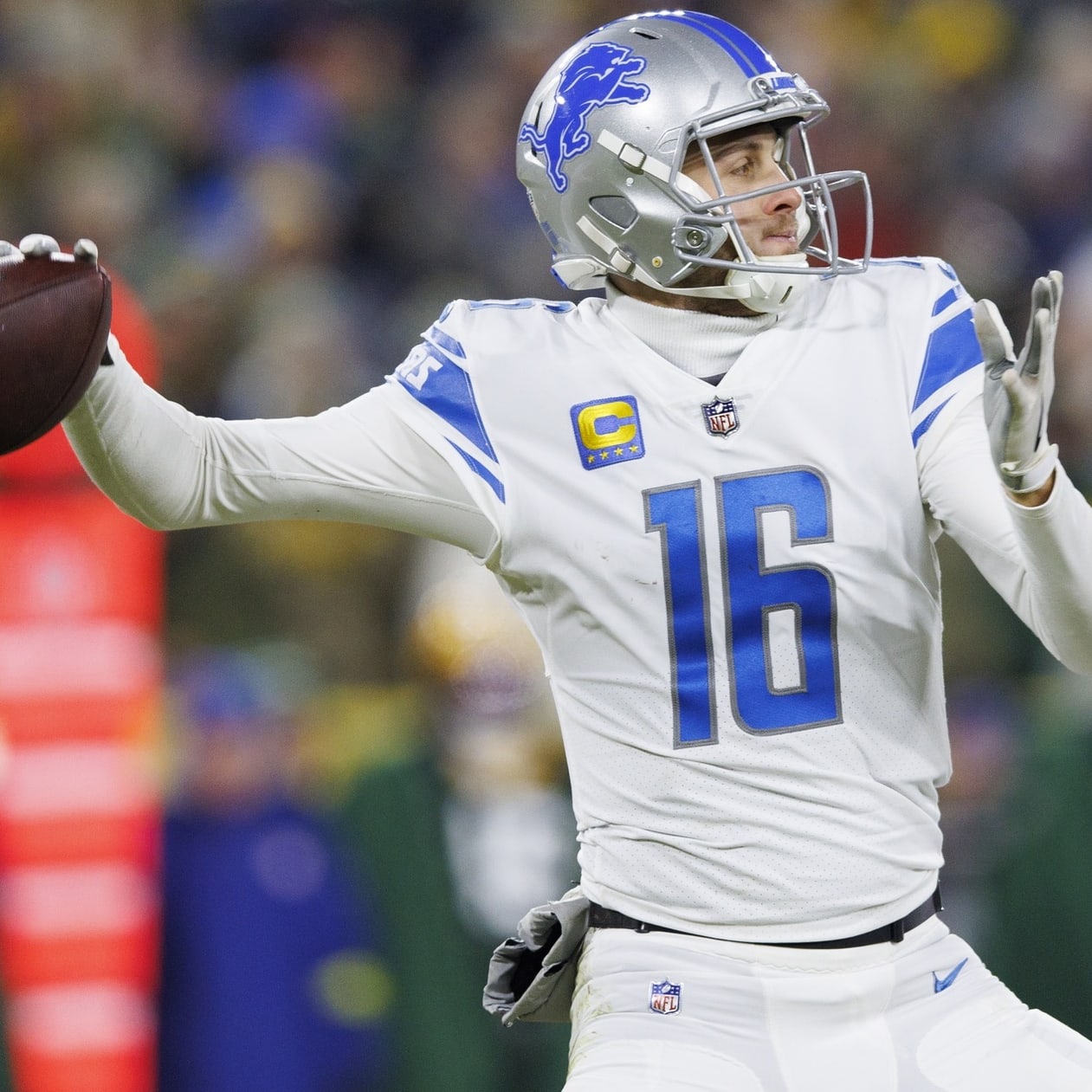
RB Jahmyr Gibbs played 73% of snaps and took 34 of 37 RB opportunities (92%) for 186 yards and two TDs. Get used to that.
RB Sione Vaki was the No. 2 RB and got just three touches on 22 snaps, with his workload including 7-of-9 snaps on 3rd-and-4+. Basically, the Lions put him on the field when the ball wasn't likely to go to the RB. Gibbs, on the other hand, got the ball on 34 of his 53 snaps.
TeSlaa, Williams, ARSB and LaPorta all had slot alignment rates between 27% and 33%.
Sam LaPorta handled an 81% snap share and 80% route share in his first game back from back surgery, with eight targets on his 33 routes (24% TPRR) and 5-48-0 receiving.
I brought up this LaPorta block to Sewell today. "That touchdown was all on him." I wrote about it last year, before the injury, but LaPorta's growth as a blocker continues to impress. The work he's put into the dirty work drives home why team wants him around long-term. https://t.co/icOQzaIpqF
— Justin Rogers | Detroit Football Network (@Justin_Rogers) September 14, 2026
The Dolphins fell behind in a hurry and didn't end up running the ball much, which is worth noting because there was offseason talk that they'd be the type of team that continued running even when behind by multiple scores late in the game.
QB Malik Willis ended up dropping back on 72% of snaps, channeling his inner Joe Burrow (at least in that sense).
Predictably, a large share of Willis' dropbacks didn't result in targets. Willis either scrambled or took a sack on one-fourth of his dropbacks.
Miami finished with 50 plays, seventh-fewest of Week 1.
The Dolphins used 11 personnel on 60% of snaps in the first half, including five of their 10 plays on first down. They then used 11 personnel on 73% of snaps after halftime.
When not in 11p, the Dolphins used 21 personnel with FB DJ Herman.
Backfield
RB De'Von Achane took 88% of snaps and 16 of 17 RB opportunities. He accounted for 78.6% of Miami's designed runs, with Malik Willis getting two and Jaylen Wright one.
Only Jonathan Taylor (89%) had a larger snap share among RBs in Week 1.
No clear winner between Wright and Ollie Gordon, each of whom played three snaps.
Pass Catchers
WR Malik Washington played 98% of snaps and led the Dolphins in both targets (8, 30%) and air yards (128, 39%), but rookie Caleb Douglas did more (5-94-0 receiving line) with slightly less (90% snaps, 7 tgts, 117 AY).
Douglas looked good, but he missed out on a makeable sideline catch due to poor footwork, which also happened during the preseason. That's nitpicking, of course, for a rookie third-round pick who is starting (and producing) out of the gate.
Douglas played 93% of snaps in 21 personnel and 88% in 11 personnel.
He was in the slot for 37% of his snaps in 11,not far behind Washington's rate (47%).
My take here is boring. I think Douglas is probably fool's gold, but in redraft leagues it's often worth paying to find out with these early season surprises -- kind of like calling a small bet into a big pot on the river (not saying that's always a good idea).
Rookie WRs Chris Bell (50% routes) and Kevin Coleman (36%) split the No. 3 role in an offense that looks more three-wide-heavy than what I'd expected pre-season. Bell had a 25-yard catch on two targets, with Coleman adding two incomplete targets.
Remember that Bell tore an ACL last November and got a late start on camp. He may blow by Coleman and even overtake Washington for a starting job this year.
The Dolphins stayed in 11 and 21 personnel, which means TEs Greg Dulcich (74% snaps) and Will Kacmarek (28%) were on the field together just once.
That's a formula that could be OK for Dulcich's fantasy value, if he can hold up as a blocker and/or shine as a pass catcher. On Sunday, he didn't get off to a great start there.
Rookies who received a +20% Target Share and Air Yards Share in Week 1
Caleb Douglas KC Concepcion Carnell Tate
Douglas was the only rookie WR to average double-digit Expected Fantasy Points (10.2)
The Raiders used 11 personnel on just three of 28 snaps on first down, instead relying on a mix of heavier packages (21, 22 and 12). They dominated possession and ended up running the seventh-most plays of any team in Week 1.
Backfield
RB Ashton Jeanty played 73% of snaps and took 29 of 36 RB opportunities (81%) en route to 147 total yards and two TDs (both receiving). After the game, he attended a memorial service for himself, courtesy of the Raiders' beat writers.
No word yet on whether those same beat writers have issued me an official apology for allowing other people to get Jeanty in the third round (or later) while I was in Mexico and couldn't draft a damn thing.
Jeanty's workload included nine of 13 snaps on 3rd-and-3+. He also took 70% of first-down snaps before the kneeldown drive, and got 79% of second-down snaps.
Mike Washington looked good again, taking seven carries for 41 yards on 13 snaps.
He took the final carry of the game (besides kneeldowns), but Washington's other six carries came before the fourth quarter.
RB Dylan Laube played nine snaps, including three kneeldowns. His six competitive snaps all came on 3rd-and-3+ or 2nd-and-long.
Not a big deal for Jeanty if Laube takes a few pass snaps per game. Jeanty will still be out there for the most important third downs and hurry-up situations, in all likelihood.
Pass Catchers
WR Tre Tucker handled a 70% snap share and 87% route share, making him the team's only WR to go above 60% for either number. He didn't do much, putting up 2-27-0 on four targets across 27 routes — a familiar sort of stat line for Mr. Tucker.
The Raiders largely stuck with Tucker, Jack Bech and Jalen Nailor as their WR trio for 11 personnel, but they rotated heavily in all other packages.
Bech made the most of his limited chances with 3-23-1 on four targets (13 routes 42%).
TE Michael Mayer played 81% of snaps and handled a 74% route share while leading the team with seven targets (24% TPRR). His aDOT was just 4.1, mostly seeing short/quick passes.
The Cardinals unexpectedly built a lead and ended up running the fourth-most plays (72) of any team Week 1.
Arizona used 11 personnel on 72% of snaps and 62% of first-down snaps before the fourth quarter.
No. 3 receiver Kendrick Bourne caught four passes over the first three drives, so there wasn't much reason to get away from it with both Bourne and TE Trey McBride having so much success on short passes.
The Cardinals then dropped to 44% 11 personnel usage in the fourth quarter while sitting on a lead.
Week 1 Leaders in QB sneak attempts
SF Brock Purdy (2/3) ARZ Jacoby Brissett (2/2) CIN Joe Burrow (2/2) CHI Caleb Williams (0/2) NYG Jaxson Dart (2/2) LAR Matt Stafford (0/1 lol) MIN Carson Wentz (1/1) BUF Josh Allen (1/1, TD, duh) GB Jordan Love (0/1) JAX Trevor Lawrence (1/1)…
RB Jeremiyah Love played just two snaps over the final four drives (out of 13 plays), but he took 54% of snaps before that and had a 10:8 carry advantage over Tyler Allgeier at the end of the third quarter.
Allgeier then got nine of 10 RB carries in the final frame to finish with 17-61-0 on the ground, compared to 11-41-1 for Love (with 2-9-0 receiving).
In other words, the workload split was in Love's favor before the fourth quarter. Not by a huge margin, but he was ahead for carries, targets, snaps and routes.
Allgeier won't be a recommended play Week 2 against Seattle, as a different game script could limit him to single-digit carries. There's also a good chance his role declines as Love gains experience and is further removed from his ankle injury this summer. I'm not sure if that'll happen Week 2 or later on, but it's coming.
Pass Catchers
WR Michael Wilson led Arizona's skill players in snap share (85%) and route share (92%), finishing with 5-66-0 on seven targets (19% TS, 29% AYS).
Overshadowed by McBride and Bourne early on, Wilson got hot before the half with a three-snap sequence in which he caught two passes and drew a DPI penalty to bring the Cardinals into FG range.
Wilson later had another sequence with targets on three straight plays. Jacoby Brissett seems to like doing that, for whatever reason. It does usually seem to work...
WR Marvin Harrison drew just three targets on 33 routes (85% route share). He made a nice 33-yard catch and was a full-time player, but it's obviously a bad sign to not have any real production on a day when everyone else did.
TE Trey McBride did his thing with 13 targets on 34 routes (87% RS, 38% TPRR) and a 9-95-1 receiving line. He'll eat first in the passing game, as he should, but I still worry that he'll have a tough time sustaining the truly massive usage now that the Cardinals also want to get the ball to Love and Wilson. It wasn't an issue Sunday, however.
Mike McDaniel's debut was a huge disappointment despite a beautiful opening drive that saw Ladd McConkey catch three passes for 60 yards to set up an eight-yard TD for Omarion Hampton.
Hampton then lost a fumble on the second drive, and the third series ended with a failed fourth-down attempt from Arizona's 3-yard line. The Chargers didn't get another chance before halftime, and they then scored just once on seven drives (each lasting five plays or fewer) in the second half, struggling with penalties and other mishaps.
The Chargers used 11 personnel on just 29% of plays before the fourth quarter.
They took 63% of first-down snaps in 21 personnel (Alec Ingold scenes) before Q4.
Backfield
RB Omarion Hampton took 57% of snaps and 12 of 16 RB opportunities (75%), finishing with 12-43-1, a lost fumble and no targets.
Hampton played just 35% of snaps in the fourth quarter, after logging 68% through the first three quarters.
Kimani Vidal took three snaps without a touch in the fourth quarter, and Keaton Mitchell had six snaps (also without a touch).
Hampton played 69% of snaps on first down, 61% on 2D, 38% on 3D.
The workload shares for Hampton are solid, with around two-thirds of snaps and three-fourths of touches before garbage time. Now he and the Chargers will need to play better so he can do something with it. (I think they will, and he will.)
RB Keaton Mitchell played 31% of snaps but didn't record an official touch in the second half. He got one carry on the opening drive, and then three carries on the drive after Hampton's fumble. Post-halftime, Mitchell had one target wiped out by a penalty and zero touches on nine official snaps.
Pass Catchers
WR Ladd McConkey put up 5-82-1 before exiting at the end of Q3 with a rib injury.
He's considered day-to-day, per ESPN's Adam Schefter.
McConkey played 71% of snaps through the third quarter, same as Quentin Johnston. However, McConkey had a 17-12 route advantage over QJ at the time (Tre' Harris had run 10 routes).
McConkey's pre-injury route share: 89%. With 7 targets on 17 routes (41% TPRR).
McConkey took 12 of his 25 snaps in the slot (48%), with 44% on the perimeter.
In 11 personnel, McConkey played seven of his eight snaps inside. He also got some slot snaps from heavier groupings on plays where a TE/FB/RB was lined up outside.
All the role specifics are what Ladd drafters wanted. And it worked for him; the Chargers just played poorly otherwise and were set back by a mix of penalties and turnovers.
WR Quentin Johnston had a 63% route share before McConkey's exit, with two targets.
Johnston then saw four targets in Q4 but caught only one for nine yards, playing 94% of Q4 snaps along the way.
WR Tre' Harris played every snap in the fourth quarter after McConkey's departure. Before that, Harris had a 53% route share and three targets. He finished with 3-20-0 on six targets.
TE David Njoku put up 5-58-0 on five targets, but a 47% route share won't cut it for fantasy.
Gadsden caught two passes for 32 yards on five routes, playing just 16% of snaps. But with Kolar and Ingold also playing a lot, Njoku's margins are thin.
Kolar wasn't targeted, handling a 55% snap share and 35% route share. Any fantasy interest seemingly would require a Njoku injury.
The Packers used 11 personnel on just 35% of snaps across their first five drives, including just one of eight plays on first down. They were mostly in 12 personnel (47%) or 13 personnel (27%) on early downs until shifting to a two-minute drill before halftime.
Green Bay then used 11 personnel on just 22% of snaps over the first four drives of the second half, before shifting to exclusively 11p at the end when chasing a deficit.
Remember: It's common for teams to play way less 11 personnel against Brian Flores. We've seen this from everyone to the Rams to the Lions to the Packers (multiple times now). Still, tough scenes for Jayden Reed.
Backfield
RB Chris Brooks got the start and the first two carries, ultimately handling a 55% snap share but just eight of 22 RB opportunities.
Brooks took nine of 10 snaps on 3rd-and-4+.
RB MarShawn Lloyd didn't start and played only 45% of snaps, but he got 14 of the 22 RB opportunities (64%). It was a brutal matchup for him, facing a blitz-happy Brian Flores defense that also is good at shutting down the run.
Lloyd didn't do much, but he could still get more playing time in matchups where Matt LaFleur is more worried about running ability and less worried about pass blocking.
Lloyd played 59% of snaps on first down, 50% on second down and 17% on third down.
I'm skeptical of Lloyd as a player (and fantasy asset), but the role here wasn't too bad in light of the context of the game. A Week 2 matchup with the Jets lines up much better.
Pass Catchers
WR Christian Watson put up 6-147-2 on the strength of an 80-yard catch-and-run TD, handling a 78% snap share and 80% route share in the process, with 20% of the targets.
Watson's usage shares weren't that great, but it's mostly the playing time that we worried about in the past and that seems like an issue no longer.
WR Matthew Golden actually led the Packers in route share (87%), target share (30%) and air yard share (33%), out-targeting Watson by a 6-2 margin in the fourth quarter.
Watson should still be treated as the No. 1 WR here. He looked great, the gap in route share was negligible, and he's always posted strong per-route numbers. There's room for a Golden breakout, but it'd probably be in addition to Watson's success, not instead of.
Golden took just four snaps (7%) from the slot, compared to 23% for Christian Watson and 68% for Jayden Reed.
WR Jayden Reed played only 53% of snaps before the fourth quarter.
Reed did finish with seven targets, but there's no cause for excitement when he produced only 20 yards and ran 11 fewer routes than Golden.
Reed played just 19% of snaps in 12 personnel, compared to 91% for Golden and 86% for Watson.
Reed and Golden each played four of 10 snaps in 13 personnel. Watson took the two others.
TE Tucker Kraft handled a 66% snap share and 48% route share, falling shy of his pre-injury workload shares. He caught three of six targets for 65 yards, so it was an excellent outcome overall for his first game back from ACL surgery.
Kraft can go back in lineups as soon as Week 2, if he wasn't there already. The snap/route shares may lag behind last year's some, but he should land safely above a 50% route share next week.
QB Kyler Murray was concussed on the second drive of the game, forcing Carson Wentz into action (heroically).
The Vikings used 11 personnel on just 23% of first-down snaps, mixing between 12p (23%), 21p (35%) and 22p (15%).
Backfield
RBs Aaron Jones and Jordan Mason split work as expected, albeit with DeeJay Dallas stealing six snaps on passing downs (presumably for blocking reasons).
Mason came out of the game with a sore thumb, but he rarely sees targets anyway (and didn't in this one).
Mason put up 15-59-1 with a 48% snap share and 17% route share.
Jones put up 12-40-1 with a 43% snap share and 23% route share.
Pass Catchers
WR Justin Jefferson rode the Wentz wave to 8-92-2, with a 97% route share and 31% TPRR.
Murray is better than Wentz, but the former might be better news for JJ's production.
WR Jordan Addison handled an 87% route share but was targeted just twice on his 26 routes and finished with a big fat goose egg.
Addison and Jefferson played 100% of snaps in both 11 and 12 personnel.
Jefferson got 6-of-8 snaps in 22 personnel, with Addison and Jennings taking one apiece.
WR Jauan Jennings played 100% of snaps in 11 personnel and 5% of snaps otherwise.
Addison had a bad day, but the Vikings never took him off the field in favor of Jennings.
TE T.J. Hockenson actually played three fewer snaps than Josh Oliver yet finished with a 65% route share and 4-36-1 on five targets.
No upside here, but Hockenson should at least improve on last year's hilariously bad numbers. He's not completely washed up as a real-life player.
Hockenson took 76% of snaps in 11 personnel and 100% in 12 personnel. He mostly came off the field for 12 personnel in favor of TE Josh Oliver and FB Max Bredeson.
Justin Jefferson's six career games with Carson Wentz as primary QB...
WR29 (5-75-0) vs CIN WR8 (10-126-0) vs PIT WR11 (7-123-0) vs CLE WR27 (5-79-0) vs PHI WR20 (7-74-0) vs LAC WR3 pending (8-92-2) vs GB
31.5% target share 43.6% air yards 2.55 yards per route
The Commanders used 11 personnel on 46% of snaps over their first three drives and then 78% of snaps the rest of the game.
They still finished 26th in PROE, with 27 RB carries on 67 plays (7th). Jayden Daniels took just two designed runs and was held to 195 yards, though he did throw a pair of TD passes.
Backfield
RB Jacory Croskey-Merritt got the start and ended up playing 49% of snaps while handling 17 of 30 RB opportunities (57%).
Croskey-Merritt played 67% of snaps on first down, 59% on second down and 0% on third down.
Not counting the first quarter, JCM took 72% of snaps on first down and 61% on second down. That sounds bullish, but he did cede three carries to a rookie down the stretch, in addition to losing passing-down work to White. Some form of committee figures to preside still.
JCM scored a one-yard TD after converting a 4th-and-1 on the same drive, but White did convert a 3rd-and-1 in between to keep the same series going, so it's no sure thing Croskey-Merritt dominates short-yardage work.
Despite not starting, Rachaad White played 69% of snaps in the first quarter, taking four of the seven RB touches (all carries).
After the first quarter, White got only five touches the rest of the game while playing 34% of snaps.
RB Kaytron Allen took four carries for 16 yards on seven snaps, getting three of his carries in the fourth quarter on what was almost the game-tying drive. His role could grow if the Commanders aren't happy with the other guys.
Pass Catchers
WR Terry McLaurin played 16 of 17 snaps in 12/13 personnel, plus 85% of snaps in 11 personnel, handling a 92% route share but struggling against Philadelphia's tough secondary.
He finished with four targets on 35 routes, producing a 2-14-0 line. Better days ahead, though between Sunday's result and the Diggs signing we can probably dismiss any pre-season optimism about a surge in target volume under new OC David Blough.
WR Stefon Diggs led the team in targets (nine) and put up 4-55-1 despite handling a modest 61% snap share and 66% route share.
Diggs did play some snaps in 12 personnel (45%), but not in 13p, and his snap share in 11p was only 73% (not terrible, to be fair).
Diggs took 49% of his snaps from the slot, including 51% in 11 personnel.
I won't mention the penalty, since Diggs is hilarious and I want the Commanders to lose anyway. Good work all around.
Rookie WR Antonio Williams was only the No. 4 WR in terms of snaps/routes, but that may change soon because he caught each of his four targets (on just 10 routes) for 64 yards and a TD.
Dyami Brown, meanwhile, saw two incomplete targets across 22 routes.
Williams took more than three-fourths of his snaps in the slot at Clemson, but his slot-alignment rate was just 32% in his NFL debut.
Williams played 23 snaps in 11 personnel and just two snaps otherwise.
TE Chig Okonkwo missed the fourth quarter with a hamstring injury, after taking 80% of snaps through the first three quarters.
His early role was promising in terms of snaps and routes, but he finished with just 16 yards and three targets and may now miss time. Also, Washington's WR group is looking pretty deep if they're on to something with Williams.
QB Jalen Hurts' 33 dropbacks yielded only 22 pass-catcher targets. The Eagles were middle of the pack for PROE in Week 1, but you wouldn't know it from the box score because Hurts had five scrambles, three sacks and three throwaways.
This is nothing new.
Backfield
RB Saquon Barkley played 70% of snaps and took 17 of 22 RB opportunities (77%).
Barkley played 77% of snaps on first down, 63% on second down and 71% on third down. He was subbed out some, but not for any one specific situation.
His overall snap share goes up to 73% if we don't count two kneel-down plays at the end.
Barkley broke off a 42-yard run and played way better than the stats suggest, dealing with a dreadful performance from Philadelphia's offensive line.
RB Tank Bigsby got just one carry and four snaps before taking the kneel-down snaps at the very end of the game. So much for any thoughts of an expanded role. He might still get the lead role over Will Shipley in the event of a Barkley injury, but this does make you wonder if it would be closer to an even split than most have assumed.
Saquon Barkley gained 78 of his 83 rushing yards after contact against the Commanders.
Impressive effort by him, much less so by the Eagles' run blocking.
WR DeVonta Smith played 91% of snaps. The route share (79%) doesn't look great because he had to block for screen passes, but he rarely left the field and accounted for 27% TS and 37% AYS. All good.
WR Dontayvion Wicks played 91% of snaps and overcame a rocky start with a 64-yard reception and a nine-yard TD grab. He was targeted on just four of 26 routes.
WR Makai Lemon played 92% of snaps in 11 personnel but no other snaps (0-for-15).
He was targeted on four of 25 routes, with three of those looking to be predetermined targets. (He was blown up twice on screen passes, which isn't his fault.)
TE Dallas Goedert laughs in the face of TD regression. I guess that's fair, given how many seasons he had with like 700 yards and only four TDs.
The regression is still coming, he said with his dying breath.
Goedert played 94% of snaps but did a bunch of blocking on pass plays, either for Jalen Hurts or screen passes.
The Giants dominated possession and limited the Cowboys to seven drives (it was really just six, because one started with 14 seconds left in the half).
The Cowboys used 11 personnel on 68% of snaps in the first half. As expected, it remained their main grouping even before they fell behind and mostly abandoned the run.
Backfield
RB Javonte Williams played 73% of snaps and took 17 of 20 RB opportunities (85%), scoring two TDs and gaining 72 yards despite the limited drive/play volume for Dallas.
Malik Davis suffered a season-ending injury during practice last week, and Emari Demercado ended up playing just four snaps (two carries) in his stead. The Cowboys instead used FB Hunter Luepke as the lone back at times in passing situations. That's nothing new, but they tend to do it more when they don't trust the RB depth.
Williams looks ready to repeat last year's production, if not improve on it.
Pass Catchers
No real concern here, though it was perhaps surprising to see Ryan Flournoy's route share (69%) landing so close to CeeDee Lamb's and George Pickens' (78% apiece).
Lamb and Pickens were still in the normal range of playing time for starters, but we've seen them up in the 90s for snap/route share before, and it would be ideal for fantasy if they get back to that range... something to keep an eye on Week 2.
Rough night for Pickens... he had a first-quarter drop that wouldn't have counted anyway, but the drop allowed New York to decline a Dallas penalty and force a punt instead of another third-down try. Then, shortly before halftime, Pickens dropped a deep ball for a gain of 30+. He'll be fine for fantasy, but Sunday's game might've turned out differently for the Cowboys if not for his mistakes.
TE Jake Ferguson handled a 75% snap share and 75% route share, reflecting his role from last year. He drew two targets on 27 routes, while backup Brevyn Spann-Ford got two targets on eight routes.
The concern for Ferguson isn't Spann-Ford; it's the possibility of Javonte handling more of the dump-off / check-down targets this year. Not saying it'll play out that way because of one game, but it is a possibility, and Ferguson already has target-rate concerns when both Lamb and Pickens are healthy. I won't put Ferguson in 'stock down' because I was already kind of a pessimist, and his snap/route shares were strong. But this did nothing to dissuade my pessimism about his 2026 fantasy value. It still feels like he needs a Pickens/Lamb injury in order to get any intentional targets instead of just checkdowns.
Jaxson Dart was fantastic, with encouraging rushing usage on top of his efficient passing. He had five scrambles and three designed runs, taking eight rush attempts for 59 yards before losing five yards on three kneel-downs at the end.
The Giants used four different personnel groupings on at least 12% of plays, mostly going with two-wide or even one-wide looks outside of clear passing situations.
NYG used 11 personnel on just 29% of snaps pre-halftime, so this wasn't a game script thing (it wasn't a surprise either, re: Greg Roman, Patrick Ricard).
Backfield
RB Cam Skattebo took 18 of 26 RB carries (69%) while playing 60% of snaps, but his route share was just 25% with Devin Singletary (50% routes, 4 tgts) surprisingly handling most of the passing downs.
Skattebo had a good night, averaging 4.5 YPC and scoring a TD, but it's a bit surprising to see him iced out of passing situations. That was a huge strength of his at ASU, and he looked comfortable catching passes last year as well. It might be that the Giants trust Singletary more in pass protection, or perhaps they just didn't want Skattebo playing a ton of snaps. He at least solidified his standing as the lead runner.
RB Tyrone Tracy gained 14 yards on two carries, but those were his only two snaps.
WR Malik Nabers played only 53% of snaps, but his route share was 67% and his target rate was 38%, so he still led the team in both targets (nine) and air yards (100).
Nabers looked great, and it shouldn't be long before his route share is pushing up toward 80%, or even higher. Dart also looked great. Just remember that the Dallas defense made a lot of teams look this good last year. The Cowboys made a lot of offseason changes, to be fair... not looking great so far.
TE Isaiah Likely was the other big story with 8-78-2 on eight targets, though we should caution that his snap share (50%) and route share (64%) were basically no different from his norms in Baltimore the past couple years.
That doesn't mean Likely's Week 1 was entirely a fluke; there was already a strong argument that his target rate and per-route production would increase with the Giants. But... it would be hard to see more than 5-6 per week on a 64% route share in an offense with a healthy Malik Nabers.
I do think Likely is good enough in real life to be a solid fantasy starter, but he might need an 80% route share to do it if the Giants also have Malik Nabers and a decent running game. There is, of course, a chance that playing well will lead to more playing time.
Long story short... Likely gets a boost, but I'm not as stoked as some others may be. I'm buying the Dalton Kincaid breakout more than this one, given that he got a huge boost in playing time compared to pre-2026 and put up his numbers against a good defense.
Rookie WR Malachi Fields surprisingly led NYG skill players with a 72% snap share, but his 50% route share was tied for fourth. The Giants seemingly wanted his size for blocking, while Nabers and Darnell Mooney (57% snaps, 69% routes, 2 tgts) were used more on passing plays.
Still, it's a great sign for a rookie to be playing so much out of the gate. And he saw two more targets than Mooney.
TE Theo Johnson (47% snaps, 39% routes) got slightly less playing time than FB Patrick Ricard (53% snaps). No surprise there - it just confirms Johnson won't even have deep-league value unless Likely misses time.
The broadcast discussed Odell Beckham a bunch, but he ran just seven routes (19%) and wasn't targeted.
The Broncos were awful on offense and couldn't stop KC's running game, so they finished with just 47 plays, the fewest of any team in Week 1. There are better days ahead for Denver's offense, though nobody feels good about Davis Webb's debut as the "full-time playcaller" (he's probably one bad week away from Sean Payton taking it back).
If you didn't know, you'd never guess that the Chiefs lost their top two CBs this offseason. One of the guys who replaced them, first-round pick Mansoor Delane, intercepted a pass on the opening possession but then later left with a shoulder injury. The Broncos still couldn't get much of anything going, and they were forced to abandon the run down the stretch.
Backfield
RB RJ Harvey played 56% of snaps in the first half and 50% in the second half, but he only took three carries, compared to eight for J.K. Dobbins, who finished without a target and ran just five routes.
RB Jonah Coleman played three snaps without a touch. Without him involved, it looks like a classic runner/receiver backfield split between Dobbins and Harvey.
This isn't a terrible sign for Coleman. The guys ahead of him aren't bad, and he was at least active for his NFL debut. Role growth is possible even without a Dobbins/Harvey injury. However, it's hard to see this backfield offering a ton of fantasy value unless it's really thinned out by injuries and one guy has to handle a lot of work. That's clearly not Payton's preference right now, especially when he has two (or three?) decent options with different skillsets.
Pass Catchers
WRs Jaylen Waddle and Courtland Sutton were right around 80% route share but combined for just 13 yards on eight targets, while No. 3 receiver Pat Bryant (58% routes) caught four of six targets for 42 yards.
It was ugly for Waddle and Sutton, but so was everything else for Denver's offense.
Waddle had a bad third-down drop on the drive after Walker's long TD run.
Sutton had a drop early in the game.
Bryant dropped a pass and stalled a drive with a holding penalty.
TE Evan Engram put up 4-43-1 on five targets, with strong snap/route shares (64%, 58%) relative to last year, including a 60% snap share in the first half (it wasn't just game script).
It's hard to be optimistic after last year, but Engram might see 4-5 targets per game if he keeps getting this type of playing time. That'd make him a good endgame pick for best ball, though perhaps not much else.
QB Patrick Mahomes looked healthy, but the Chiefs leaned into Walker and finished Week 1 ranked just 24th in PROE (-5.4%). Not a huge surprise there, nor will it be a surprise when that number moves up throughout the season (no disrespect to Walker, but it won't be this easy most weeks).
Backfield
RB Kenneth Walker got fed from the jump and was picking up chunks early on, also converting a pair of 3rd-and-1s on the ground and a 3rd-and-10 through the air. He then broke off a 60-yard TD run to convert a 4th-and-1 early in the fourth quarter, and then added a short TD reception on a shovel pass later on.
Walker's KC debut couldn't have gone better, and his workload shares were even stronger than what you see above before the Chiefs went up three scores and shut the door.
Walker had a lot of room to run, but he also created a ton of extra yards with broken tackles and clever cuts.
RB Emmett Johnson got most of his work in garbage time, but he did take a short pass for a 25-yard gain early in the fourth quarter, breaking two tackles along the way to set KC up for the clinching score.
Johnson wasn't going to have standalone value anyway, so Monday is good news for his fantasy value on two fronts. First, Walker's massive usage increases the chances of an injury absence at some point this season. Second, Johnson's strong play increases the chances he'd take advantage if that were to happen. There are other ways it can play out of course, but Johnson belongs at/near the top of any handcuff rankings after Week 1.
Kenneth Walker played 77% of snaps before the final three drives.
At the time of Walker's final touch, Emmett Johnson had taken just 3 carries and 1 target (compared to 23 + 6 for Walker).
85% opportunity share before Johnson took over for the final drive and a half.
WRs Rashee Rice and Xavier Worthy both cleared 80% route share, but they combined for just 37 yards. Rice did score a TD.
Tyquan Thornton was the No. 3 receiver and played 67% of snaps, but he saw just one incomplete deep target on 22 routes.
TE Travis Kelce had similar playing time shares to last year with a 70% snap share and 78% route share. He was having a quiet night until a 59-yard catch-and-run midway through the third quarter moved him into second on the all-time TE receiving list.
Cyrus Allen Watch: one snap, one incomplete target. Not a great sign that Thornton/Rice/Worthy were always the grouping in 11 personnel.
Jalen Royals didn't play on offense but did manage a key penalty on special teams.
Jerry is a Writer, Editor and Lead Projections Analyst at RotoWire, where he's been writing NFL articles and player notes for more than a decade. After four years as a profitable, multi-sport DFS player, Jerry shifted his focus toward traveling and NFL fantasy writing (with an occasional gambling side hustle along the way). Nowadays, Jerry devotes 90 percent of his bankroll to best ball and 90 percent of his soul to his dynasty teams. You might also know him as the slowest slow drafter on Drafters (StringerHell) and DraftKings (jd0505).
Continue the Conversation
Join the RotoWire Discord group to hear from our experts and other NFL fans.


 Patriots (10) at
 Seahawks (13)


 49ers (27) at
 Rams (7)
 Jets (23) at
 Titans (10)
 Bills (36) at
 Texans (31)
 Bears (59) at
 Panthers (37)
 Browns (10) at
 Jaguars (34)
 Falcons (13) at
 Steelers (20)
 Ravens (41) at
 Colts (23)
 Buccaneers (27) at
 Bengals (33)
 Saints (30) at
 Lions (31) - OT
 Dolphins (13) at
 Raiders (27)
 Cardinals (26) at
 Chargers (14)
 Packers (22) at
 Vikings (39)
 Commanders (22) at
 Eagles (24)
 Cowboys (20) at
 Giants (28)
 Broncos (10) at
 Chiefs (31)