Fantasy Hockey 2026-27 Draft Analysis, Scoring System & NHL Players to Watch
The NHL is back, with a longer season and an earlier start. So is Hutch's Hockey, my weekly column of thoughts and suggestions to help fine-tune your fantasy team.
Fantasy Hockey Scoring System Strategy for Head-to-Head Points Leagues
The short preseason didn't make things easy on the draft schedule, but it worked out fine. I'm playing as much as I want to, and I'm trying a few different things this year. Most leagues I'm in are between eight and 12 teams, though there are few sixes that I've been in for a while. The biggest change was leaning into head-to-head points leagues more. I did that so much, I even developed what I (somewhat selfishly) think is a fairer scoring system than default. It looks like this:
Goals: 5
Assists: 3
Plus-minus rating: 1
PIM: -0.15
Power-play points: 1
Shorthanded goals: 3
Shorthanded assists: 2
Game-winning goals: 1
Shots on goal: 0.2
Hits: 0.5
Blocked shots: 0.75
Wins: 3
Losses: -2
Goals against: -1
Saves: 0.33
Shutouts: 10
The goal with this system is to prevent goalies from being overpowered but still give incentive to the rostering the elite ones. It also maintains value for defensemen, which is important to me in any league. The system rewards special-teams play without going overboard, and it punishes PIM. Having PIM count as a positive in category leagues has never made sense to me -- taking penalties doesn't help on the ice. This format isn't a lock. I'm not sold on keeping plus-minus rating, which often encourages prioritizing players from good teams over utilizing the best player available. Most importantly, scoring leads the way, but players can still have a good performance without a point.
The other aspect to the league is a season-long move limit. Points leagues without a move limit in some fashion turns into a waiver-wire fest, which diminishes the value of drafting well. I considered a weekly limit, but instead went with the season-long limit of 75 moves to free up some strategy. Saving moves to the end could make the playoffs more competitive, or managers may want to use them up early. It averages out to about three per week, but it leaves flexibility for when injuries pile up all at once. It's not too harsh, but it's not going to be a free-for-all for the next six months.
I'll keep it simple this week with a recap of my drafts and a broad brushstroke of the season ahead with my annual players to watch list. I'll dig into the waiver wire in earnest starting next week -- no first-game overreactions here.
Fantasy Hockey Draft Recap: Top Picks, Sleepers and Injury Risks
I took a more free-flowing draft strategy this year. There's a lot of multi-position versatility available in 2026-27, so it was less about having a clear hierarchy at the forward slots and more about working some line stacks and having good overall depth with flexibility. I took what each draft gave me. Sometimes that meant early goalies, and sometimes I grabbed one early and took some high-volume options late. There was a nice pocket of serviceable defensemen in the middle rounds that I dipped into for almost every draft, especially since I didn't get the elite blueliners often. Overall, I feel confident in my rosters. I won seven leagues last year despite some slow starts, but this year's teams look really good on paper.
In terms of what my most prototypical roster would look like, here are top 18 skaters by draft frequency, plus some goalies.
Jake Guentzel - Wyatt Johnston - Alex DeBrincat
Kyle Connor - Sebastian Aho - Adrian Kempe
Nikolaj Ehlers - Mika Zibanejad - Juraj Slafkovsky
Alex Tuch - Pavel Zacha - Gabriel Vilardi
Adam Fox - Rasmus Andersson
Mikhail Sergachev - Josh Morrissey
Jackson LaCombe - Mike Matheson
Goalies: Logan Thompson, Jeremy Swayman, Jakub Dobes, Jet Greaves
While those were my most frequent picks, I had a good spread of virtually all of the top-100 players on my list. I didn't get a ton of high draft slots, so I had to build out without the elite picks -- instead often building around Martin Necas, David Pastrnak or Nick Suzuki as a first-rounder. I also have a decent chunk of Andrei Vasilevskiy shares, thanks to frequently drafting ninth or 10th.
The players in my top 100 that I didn't take at all were Jack Hughes, Steven Stamkos, Dylan Larkin, Connor Hellebuyck, Quinn Hughes, Darren Raddysh and Tomas Hertl, as well as my No. 101, Adam Fantilli. Hellebuyck and Larkin are obvious skips -- too much uncertainty this year, and that also affected Fantilli, who signed late in the preseason. Stamkos, Hertl and Raddysh looked like regression risks to me. The brothers Hughes have their own flaws, with Jack being injury-prone and Quinn not offering enough in the non-scoring areas compared to other elite defensemen. I also came up thin on guys like Connor McDavid, Brady Tkachuk, Zach Werenski, Artemi Panarin, Sam Reinhart, Mikko Rantanen, Cutter Gauthier and Lane Hutson. It's not that I actively avoided this group; they just didn't fit the needs of my teams at the times they were available.
I also broke my personal rule of avoiding injured players a few times. I was willing to scoop up both Connor Bedard (shoulder) and Seth Jarvis (shoulder) in plenty of leagues. I was heavily in on Brock Faber before he sustained what was later revealed to be a fractured skull (yikes!). I was also all-in on an Aleksander Barkov comeback season, but his knee injury from Thursday could make that plan backfire. I shrugged off the nagging injury that Jake Sanderson (lower body) can't seem to shake. I also have a decent amount of Mark Stone and John Gibson sitting around on my rosters. Perhaps being more welcome to risky picks will pay off this year -- or perhaps I'll need to take a lot of my own advice in later weeks. Either way, this is the most confident I've felt going into a season in years. In total, I selected 189 different players, showing that I knew who I wanted a little more than in years past, when that number has been often much higher.
NHL Players to Watch in 2026-27: Breakouts, Rookies and Fantasy Targets
Now, for the players I'm keeping an eye on this year. There are any number of reasons a player will grab my attention -- some will be fantasy options I'm heavily invested in. A few are rookies. The NHL seems to get younger every year, so there's no shortage of fresh talent to pay attention to. There are also the sentimental stories and the long-time veterans who should be appreciated as long as they're sticking around. It's always an interesting mix, but just about every team has someone worth tuning in for.
Anaheim: Leo Carlsson. His production on an entry-level deal was strong, but now that he's hauling in $18 million a year, expectations have skyrocketed. Carlsson is a fantastic player, but that's a high number to live up to. He'll need multiple 100-point seasons during that contract to justify it, but that would have been true if the Ducks hadn't matched the offer sheet he signed with the Flyers. He'll also have to do it with a weaker supporting cast now that Anaheim is much closer to being a cap team.
Boston: Fraser Minten. Minten's first full season in the NHL saw him rack up 35 points, 116 shots and 142 hits in 82 regular-season outings. He did most of that from a third-line role, but he has the talent to handle top-six minutes. I'm keeping watch for when the Bruins opt to make Minten the full-time option alongside David Pastrnak, at the expense of Elias Lindholm, who looks to be past his peak.
Buffalo: Noah Ostlund. An eight-year extension on the eve of training camp elevates Ostlund into must-watch territory. The Sabres were able to keep the deal under $7 million a year, which could end up being good business, but he shot 18.3 percent in limited usage last year. He'll need to be a top-six regular soon, but as a first-round pick in 2022, he has the pedigree to be worth the money. Of the Sabres' youngest rising stars, Ostlund currently sits at the intersection of intrigue and opportunity, opening the year as the second-line center.
Calgary: Zayne Parekh. One of the toughest choices on this list, namely because watching Flames hockey this year isn't for the weak of heart. Parekh's skills are tantalizing, but rounding out his game is important. He also had just nine points in 37 outings in 2025-26, so there's plenty of room to grow on offense. He drew comparisons to many of the league's top offensive blueliners, but Calgary won't need to rush him at this stage of the rebuild.
Carolina: Brandon Bussi. From waiver claim to winning the last three games of the Stanley Cup Finals, arguably no one saw their stock rise more in 2025-26 than Bussi. Now he has to repeat it. I wasn't totally sold on him in fantasy drafts, but I snagged a few shares. Bussi has an elite team in front of him, so I'm thinking he'll be better for wins and GAA than save percentage and shutouts. That said, Pyotr Kochetkov is no slouch either, so I'm not sure Bussi is a clear-cut No. 1 in goal.
Chicago: Anton Frondell. The kids are all alright in Chicago, but I think Frondell is the most interesting this year. He dominated in the SHL in 2025-26 and looked good after coming to North America. He's skipping the AHL, and I think that's the right call, since there's top-six room on the NHL roster. If a 60-point rookie year is on tap, he'll be returning superb value, but even landing in the 40-50 point range is a wonderful campaign for a 19-year old center on a rebuilding team.
Colorado: Artturi Lehkonen. The question here is will Lehkonen do so well in his walk year that he prices himself out of Colorado? In the past, that would be a real risk, but it's a rising cap world now. He has the two-way sense to thrive alongside Nathan MacKinnon, so I'm sure the Avalanche will do all they can to hold onto Lehkonen, even if they end up having to slightly overpay in years or dollars to do it. He's one of just four pending unrestricted free agents left on the roster, so the Avalanche won't need to do too much maneuvering to make him fit, even if that means Nicolas Roy or Scott Wedgewood walks instead.
Columbus: Matthew Knies. A blockbuster trade the day before the season starts is fairly unusual. That's what happened when Knies, Emil Andrae and Steven Lorentz were sent to Columbus for Kirill Marchenko, Miles Wood and Elvis Merzlikins (shoulder). Adam Fantilli is no Auston Matthews, but Knies may be a good enough player on his own to stand out with a new team. He's also just 23 years old with three full campaigns under his belt. Superstar status? No, but he looks pretty good as a top-six power forward.
Dallas: Jason Robertson. Robertson bet on himself with a one-year, $12 million contract to stay with the Stars. He reportedly left money on the table that would have been available in other places. He's also set to be an unrestricted free agent in the summer. Can Robertson and Dallas come to an extension before then, or is he going to boost his value so much this year that he is the biggest fish in the free agency pond come July?
Detroit: Moritz Seider. I didn't draft Seider as much as I wanted this year. That was because he was going faster than I wanted to see. He's a near-perfect fantasy defenseman -- he scores, he hits, he blocks shots and he's on the power play. He's also a five-year iron man. If his offense gets into the 70-point range, he'd have a strong Norris case even on a team projected to be awful this year. Plus, who's better to watch than the guy who is always in the lineup, playing 25-plus minutes a game? On this year's Red Wings roster, there's not really a close second.
Edmonton: Vasily Podkolzin. This is as close as I'll get to first-week knee-jerk reactions. Podkolzin getting top-line usage has been exciting so far. It's not unwarranted -- Vancouver surely saw something to make him the 10th overall pick in 2019. With five points and 13 hits over three games, he's showing up on the scoresheet as well as on the ice. Getting the sidekick treatment to a superstar could put him in the 50-point range with 200-plus hits, but the power-play time is likely to fade when the Oilers get healthier.
Florida: Brady Tkachuk and Matthew Tkachuk. The first draft of this section was Aleksander Barkov, but another long-term knee injury means he won't be around to watch for a while. Instead, the Tkachuk brothers will get attention. They're agitating and productive, though their reputations precede them at times. Most importantly, they're fun for hockey fans of all types. Head coach Paul Maurice joked before the season that putting the brothers with Sam Bennett to start a game would land them in jail before the opening faceoff. He's kept them apart so far, but maybe they'll get shuffled together for the first time the Lightning visit South Florida.
Los Angeles: Brandt Clarke. The Kings changed the guard up front when Anze Kopitar retired at the end of last year. The next seismic shift is on the blue line, as Drew Doughty's career is winding down and Clarke's is ramping up. No disrespect to Doughty here -- Clarke is simply the player with the most to gain on this roster in the near future. It's time to see if Clarke will be an elite blueliner or just a good one.
Minnesota: Quinn Hughes. Will he stay or will he go? That's a question for later. Hughes' main priority right now is helping the Wild find that next level that has so often evaded them during their franchise's existence. The Wild gave up a haul to pry him out of Vancouver, and many believe they need to throw a pile of money at him to keep him around. That's not the only path here -- they could get just as much or more back if Hughes has to be dealt away, but the return shrinks the longer the decision lingers in the air. He's a stud defenseman, but with his future on the line, that could be a huge distraction.
Montreal: Ivan Demidov. Aside from an eight-year contract signed in July, talk about Year 2 of Demidov has been pretty quiet. This is a winger who has 19 goals, 43 assists and 127 shots on net over 82 regular-season games last year before adding nine points in 19 playoff outings. The sophomore slump is always a risk, but Demidov is a playmaker. He'll be as good as his linemates' luck, though the potential is there for him to start taking over. He has Pavel Datsyuk-like creativity, but will Demidov be able to elevate his production into the Nikita Kucherov tier over the years? Kucherov had 18 points in 52 games in his age-20 season, but he also has a better shot than Demidov does right now.
Nashville: Mavrik Bourque. A cap casualty in Dallas, Bourque gets a fresh start in Nashville in his third season. Sounds familiar, huh? Logan Stankoven's departure from the Stars came under different circumstances, but he thrived in a larger role. Bourque didn't land in as good of a spot, but he made a long-term commitment to the Predators, so he'll still be around when the older players retire or leave in free agency. He's a middle-six mainstay for now, but he'll have room to grow.
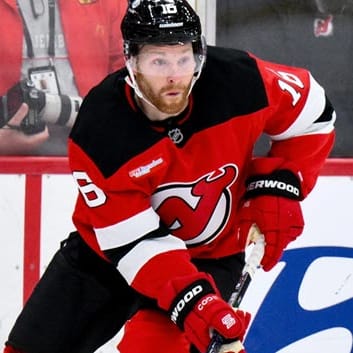
New Jersey: Anthony Mantha. One of Kyle Dubas' success stories last year, Mantha had a comeback year for the ages with 33 goals and 31 assists over 81 regular-season games with the Penguins. He lingered in free agency for two weeks before joining the Devils. The regression risk is high, but Mantha has flirted with 50-point potential in his healthier years. What he can't afford is having the bottom fall out of his production, as the free-agent market probably won't be as kind in July of 2028.
New York Islanders: Victor Eklund. Like Frondell (above), Eklund is in the NHL after a strong SHL season in 2025-26. Eklund's production wasn't nearly as remarkable, but his talent is evident. He celebrated his 20th birthday Saturday with a two-point effort, the first of many to come. The Islanders have plenty of firm bottom-six players, so Eklund should get the chance to thrive in the top six, as long as he doesn't end up in head coach Pete DeBoer's dog house.
New York Rangers: Pavel Dorofeyev. Arguably the biggest draft-day trade splash in a while, the Golden Knights moved on from Dorofeyev. Going from a Stanley Cup finalist to a rebuilding team is a jolt. Dorofeyev's shot is good enough where that might not matter much, especially since the Rangers have enough top-six talent to feed him the puck. The interest for me comes from seeing how he adjusts to the change of scenery more than anything else -- I'm not too worried about the production.
Ottawa: Tim Stutzle. The Senators spent years building up a tough identity, only to see their captain walk out the door in a trade. Stutzle can still bring the grit, but he has less help to carry the offense now. Can he respond well to pressure, or will it be a down year across the board? Stutzle is a player I really like in fantasy -- he gives you a bit of everything and is usually a consistent scorer. The Senators may struggle, but it won't be his fault.
Philadelphia: Christian Dvorak. I was skeptical Dvorak was anything more than a good third-line center prior to last year. He turned a one-year show-me contract into a five-year extension with the best season of his career. To his credit, Dvorak does a lot of the little things well -- he just never got to show that off during his time in Arizona and Montreal. He's no true top-line center, and I'm not sure he can reliably repeat his 51-point effort from last year for a few more seasons, but I'm much more confident in his overall skill set than I was at this time in 2025.
Pittsburgh: Evgeni Malkin. A long-time center, Malkin has moved full time to the wing to extend his career. The emergence of both Ben Kindel and Thomas Novak made that move possible. Now at 40 years old, Malkin's lengthy injury history and age could both catch up to him, but he was above a point-per-game pace in 2025-26, the first time he'd performed at that level in three years. Like Sidney Crosby and Kris Letang, Malkin is a Penguins legend. Enjoy the ride while it lasts, and bonus points if he can still be productive in fantasy as his career winds down.
San Jose: Igor Chernyshov. I didn't buy into the rookie-year hype for Ivar Stenberg. Chernyshov is farther along in his development, though he's still just 20 years old (21 in November). At times last year, Chernyshov looked ready for a top-line gig. He's opening 2026-27 on the third line, though that's not a bad thing with how the Sharks have constructed their combinations early on. I see him as one Mason Marchment slump away from the top six. I also like the power forward potential in Chernyshov's profile, which would complement the all-world skill of Macklin Celebrini and creativity of Will Smith quite well. Any number of young players for the Sharks will be worth the price of admission as long as the team piles up goals.
Seattle: Bobby McMann. Forget all the players who didn't want to come to Seattle. McMann got traded to the Kraken in the spring and chose to stay despite a stated desire to win. I still think it will take a homegrown superstar to get the Kraken on the map, but McMann brings a certain compete level and intensity to the land of the middle-six misfits. He looked good all over Toronto's lineup, and I think the winger can do the same in Seattle despite the lack of established talent around him.
St. Louis: Jimmy Snuggerud. The trade of Jordan Kyrou made room for Snuggerud to be a top-line player. After a 51-point rookie season, it's a role well earned for the 22-year-old winger. The Blues' preseason projections weren't friendly, mostly due to their presence in the Central Division, but this team has more talent than it's given credit for. Snuggerud is one of the leaders of that next wave.
Tampa Bay: Conor Geekie. The Lightning have been patient with Geekie's development since acquiring him from Utah in 2024. This year could be his chance to step into a full-time gig at the NHL level. He'll need a top-six job to be useful in fantasy, and that's not going to be handed to him on a team still well within a competitive window. Still, I'm watching to see if he'll cash in on his potential or if he'll get pigeonholed into being a bottom-six grinder. His brother Morgan was somewhat of a late bloomer as well, so I'm willing to give the younger Geekie a lot of runway.
Toronto: Gavin McKenna. It's basically a given that the No. 1 overall pick is on my watch list if they're in the NHL. McKenna has nothing to show for his first three NHL games, aside from three shots on goal and a minus-3 rating. There's no need to circle the wagons and raise the pitchforks -- development takes time. He's not playing with Auston Matthews currently, but skating alongside John Tavares and William Nylander is a great place to learn.
Utah: Dylan Guenther. I will take every chance I can get to hype up Guenther. I did plenty of times last year as he marched to a 40-goal, 73-point regular season. He actually had fewer power-play goals last year (nine) than the year before (12). I'm not guaranteeing anything, but there won't be a look of shock on my face if Guenther's got 50 tucks by the end of 2026-27.
Vancouver: Elias Pettersson. When I say watch, I mean from a distance. Pettersson burned me two years running in fantasy, so I stayed as far away as possible in draft day. He's started the year hot, and I've already found one spot to scoop him up on the waiver wire. If he goes cold from here, you can blame me. Let's see if he can get his career -- and the trajectory of the Canucks' franchise -- back on track in 2026-27.
Vegas: Braeden Bowman. This whole covering fantasy hockey thing makes it very tough for a player to come out of nowhere and surprise me. Bowman did just that in 2025-26. He got on my radar in October with a few good games for AHL Henderson, and he turned that into a call-up two weeks later and a 26-point rookie year with Vegas. For an undrafted forward, he's already playing with house money -- about $20.4 million of it after signing an extension for that amount before training camp. He has utility knife potential, with a little time in the top six and bottom-six work when everything else is going well for the Golden Knights.
Washington: Cole Hutson. The Capitals parted with franchise icon John Carlson at the deadline in March because they knew Hutson was coming. That's a pretty big vote of confidence for a kid before he ever played an NHL game. Hutson put up 10 points in 14 games at the tail end of 2025-26, helping the Capitals in a playoff push that came up three points short. His brother, Lane Hutson, is already among the best offensive defensemen in the league. Cole could join him in a few years, especially with a strong roster to suit up with in Washington.
Winnipeg: Viggo Bjorck. The Jets got Bjorck at eighth overall back in June, and it could be a steal in terms of instant value. Sure, he's undersized, but he makes up for that with intelligence and effort. He's already centering the Jets' second line. Anything that challenges the notion that size comes above everything is good for the NHL, so here's to a long and successful career for Bjorck. I'll be watching this year and beyond.
With that, it's time to dig in and prepare for the marathon that is the 84-game NHL season. As always, I'll be around most Mondays for waiver-wire advice and to discuss the major happenings of the previous week. Let's have a good year, and enjoy the hockey!